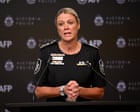
Australia’s federal police chief has issued a stern warning to political leaders, directly linking aggressive parliamentary rhetoric to an alarming surge in violent threats and harassment targeting elected representatives across the country.
Speaking amid heightened security anxieties in Canberra, Australian Federal Police Commissioner Krissy Barrett indicated that the inflammatory tone adopted by some parliamentarians is actively fuelling real-world vitriol, The Guardian Australia reported. The law enforcement head cautioned that the corrosive standard of political debate has filtered into the community, granting tacit permission for extremists and disaffected citizens to unleash hostility upon public figures.
Toxic Language Normalises Real-World Harm
The Commissioner’s intervention represents an unusually direct assessment from the nation's top law enforcement official regarding the conduct of the very figures her force is tasked with protecting. Law enforcement analysts have long warned that hyper-partisan conflict inside legislative chambers acts as an accelerant for extremist behaviour online and in the streets.
The AFP has observed a persistent escalation in reports of menacing behaviour, stalking, and harassment directed at parliamentarians and their staff over recent years. According to federal authorities, heightened socio-political polarisation and the proliferation of fringe internet movements have severely exacerbated the risk environment, making standard public engagements increasingly precarious for lawmakers.
Female Politicians Bear the Brunt of Graphic Abuse
A particularly disturbing dimension of the escalating threat environment is the disproportionate targeting of women in public life. Commissioner Barrett highlighted that female parliamentarians are singled out far more frequently than their male counterparts, often subjected to sickening threats of sexual violence and relentless digital degradation.
Security agencies have documented how attacks on female representatives routinely bypass policy critique, descending instead into misogynistic abuse designed to intimidate women out of democratic participation. This gendered hostility has raised urgent concerns within national security circles about the safety of female candidates and the chilling effect such vitriol imposes on women considering entering public office.
Wangaratta Incident Underscores Mounting Danger
The stark warning arrives in the shadow of a high-profile security breach involving independent federal MP Helen Haines, whose safety was severely compromised following an alleged deliberate attack outside her electorate office in Wangaratta, in regional Victoria.
The alleged confrontation against the Member for Indi has sharply refocused national attention on the vulnerability of MPs operating outside the fortified perimeter of Parliament House. Electorate offices, which traditionally serve as accessible community hubs for constituents, have increasingly become flashpoints for targeted aggression, prompting calls for expanded physical security measures and risk reviews for regional members.
Calls for Cultural Reckoning Across Parliaments
The intersection of toxic rhetoric and physical endangerment has prompted calls from crossbench and major party figures alike for a comprehensive cultural reassessment in Australian politics. While the AFP continues to bolster its protective operations and monitor high-risk individuals, authorities maintain that law enforcement alone cannot neutralise the threat without a concurrent shift in how politicians engage with one another.
With federal elections drawing closer, the pressure remains on political leaders to de-escalate public discourse before inflammatory rhetoric leads to irreversible harm on the campaign trail.