Australian federal police are charging nearly one person every week for targeting federal politicians, as authorities confront an escalating wave of harassment culminated by the alleged vehicular attack on independent MP Helen Haines.
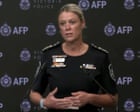
Speaking at a joint press conference with Victoria Police, Australian Federal Police Commissioner Krissy Barrett confirmed that investigators are now laying charges at an unprecedented rate amid mounting concerns over the security of public figures.
Commissioner Barrett said the national security agency is currently "charging almost one individual every week for targeting commonwealth parliamentarians or high office holders", as Guardian Australian politics reported on the aftermath of Monday's violent incident in north-east Victoria.
Escalating hostility towards parliamentarians
The revelation paints a grim picture of the political climate confronting lawmakers across the nation. Federal authorities have established specialised taskforces in recent years to monitor, assess and mitigate threats directed at federal representatives, but the sheer volume of vitriol has tested resources.
The commissioner observed that the boundary between virulent digital harassment and real-world violence is increasingly fragile. While authorities monitor known fixated individuals, the proliferation of digital platforms has amplified access to politicians, normalising aggressive confrontations that frequently spill over into actionable criminal offences.
Arrests met with shock at the front door
Commissioner Barrett noted that many offenders fail to understand the severity of their actions until counter-terrorism or security teams arrive at their residences.
She said people who make online threats against parliamentarians are often "absolutely shocked" when uniformed officers and detectives show up at their door to execute a search warrant or formally lay charges. The disconnect between behind-the-screen abuse and federal criminal prosecution remains a persistent challenge for law enforcement seeking to deter repeat offenders.
Despite ongoing surveillance of political threat environments, Commissioner Barrett acknowledged the limits of preemptive security, explaining that the AFP held no specific intelligence indicating "something as atrocious as what happened on Monday afternoon" would occur.
Wangaratta incident shakes community
The briefing followed the alleged attack in the Victorian regional electorate of Indi, which left Dr Haines hospitalised in a critical condition and sent shockwaves through the federal parliament. Brendan Nugent has subsequently faced court on three charges relating to the alleged vehicle ramming.
Dr Haines, an independent MP revered for her grass-roots community engagement and advocacy on parliamentary integrity, had been carrying out constituency work in her regional seat when the incident unfolded. The unfathomable nature of the attack has left her local electorate reeling, prompting an outpouring of bipartisan solidarity from Canberra.
The dilemma of political accessibility
The tragedy has reignited a complex national debate regarding whether security measures for federal politicians must be tightened permanently.
Australian political traditions have long prioritised unencumbered access between voters and their elected representatives, particularly in sprawling rural and regional seats where MPs frequently hold street stalls and attend town halls without protective details.
Several parliamentarians have warned against retreating behind armed escorts and barricades, cautioning that an overly fortress-like posture would effectively let hostile actors undermine democratic norms. Nevertheless, with threats rising to nearly fifty charges annually, pressure is growing on security agencies to recalibrate the safety protocols governing public office.