
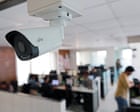
A new report is sounding the alarm over a burgeoning digital frontier in Australian workplaces: the widespread and often covert use of artificial intelligence to monitor employees. As companies increasingly deploy sophisticated tech, from AI-powered cameras to intricate keystroke trackers, concerns are mounting about the erosion of privacy and the potential for a new era of corporate control.
Workplace surveillance is no longer limited to basic CCTV, according to warnings issued by the Human Technology Institute. These evolving monitoring tools are becoming common across a diverse range of sectors, including bustling factory floors, traditional office environments, the gig economy's delivery routes, and even frontline retail operations. Crucially, a significant portion of this digital oversight is reportedly occurring without the full knowledge or informed consent of employees.
The Rise of Algorithmic Management
The Human Technology Institute has cautioned that the acceleration of AI integration is rapidly transforming how employers track their staff. The Guardian Australia reported on concerning examples provided by the institute, highlighting the granular detail now available to management. One instance detailed a fast-food restaurant employing surveillance cameras specifically to prevent workers from using their mobile phones – a move that, while perhaps aimed at productivity, also intrudes upon personal space during breaks or downtime.
Even more alarming was the case of a cashier who received a warning based on AI tracking, indicating they had made an error once every 533 scans. This level of meticulous, real-time performance evaluation, driven by algorithms, raises serious questions about fair assessment, employee well-being, and the potential for undue pressure within high-volume roles. While employers might argue such systems enhance efficiency and reduce shrinkage, critics contend they foster a climate of distrust and can lead to burnout.
Unseen Eyes: Legal Loopholes and Disclosure Gaps
The current regulatory landscape in Australia is struggling to keep pace with the rapid advancements in AI surveillance technology. Many existing privacy laws were not designed to address the complexities of algorithmic decision-making and continuous data capture in the workplace. This creates significant legal loopholes, allowing employers to implement monitoring systems with little obligation to disclose the full scope or nature of their surveillance to staff.
Experts suggest that the lack of clear, prescriptive guidelines means employees often remain unaware of the extent to which their digital footprint, and indeed their physical movements, are being catalogued and analysed. This opaqueness can undermine trust between employers and employees, creating an environment where workers may feel constantly scrutinised without understanding the metrics or algorithms used to assess their performance.
Impact on Workers and the Call for Reform
The implications for Australian workers are profound. Beyond privacy concerns, continuous AI monitoring can lead to increased stress, anxiety, and a diminished sense of autonomy. The pressure to perform flawlessly under the constant gaze of an algorithm can erode job satisfaction and potentially impact mental health. Furthermore, the data collected could be used to inform decisions regarding promotions, disciplinary actions, or even redundancies, without transparent human oversight.
Trade unions and worker advocacy groups are now calling for urgent legislative reform to strengthen workplace privacy laws in Australia. They argue for mandatory disclosure of all surveillance technologies, clear limits on what data can be collected and how it can be used, and greater transparency in algorithmic decision-making processes. As AI continues to embed itself into the fabric of the Australian economy, ensuring a balance between productivity gains and fundamental worker rights will be a critical challenge for policymakers and employers alike.


