
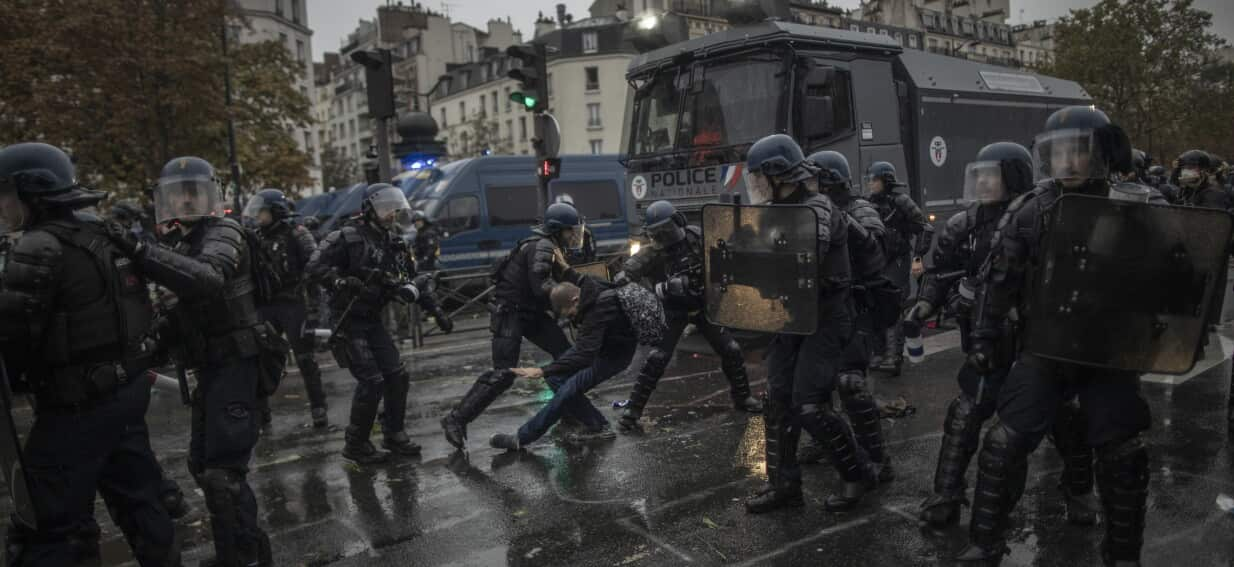
French authorities have detained close to 1,000 demonstrators following widespread street violence across the country, as mass protests against contentious government policy brought hundreds of thousands into direct confrontation with police.
The coordinated rallies, which paralysed municipal transit and disrupted major civic networks across major metropolitan hubs, saw an estimated 800,000 citizens march in dissent, SBS News Top Stories reported.
To quell the spiralling civil unrest, authorities orchestrated a colossal security operation, deploying more than 70,000 police officers and gendarmes nationwide. Despite the overwhelming state presence, confrontations between hardline factions and riot squads quickly turned volatile in Paris, Lyon, Nantes, and several southern regional centres.
Security forces mobilised across Paris and regional centres
Tensions intensified in the capital during the late afternoon as splinter groups erected makeshift barricades, torched rubbish piles, and hurled paving stones at security cordons. Tactical units responded with barrages of tear gas, water cannon, and targeted baton charges, systematically dispersing pockets of violent agitation along major boulevards.
SBS News Top Stories reported that the national arrest tally approached 1,000 as night fell, reflecting one of the largest single-day crackdowns on domestic dissent in recent French history. Dozens of officers and demonstrators sustained injuries during the melees, with emergency medical teams working under heavy escort to extract the wounded from central demonstration corridors.
Infrastructure targeted as public anger boils over
The disorder caused severe disruption to domestic and international transit, with high-speed rail corridors operating at reduced capacity and municipal bus and tram services halted in several city centres as a precaution. Municipal authorities estimated clean-up operations and infrastructure repairs would cost local councils tens of millions of euros, amounting to well over A$50 million in physical damages.
Commercial precincts bore the brunt of the property destruction. Storefronts, automated teller machines, and bus shelters were systematically vandalised along key march routes. Business federations voiced sharp apprehension over the continuing turmoil, cautioning that repeated shutdowns threatened retail revenues and international visitor confidence in the French capital.
Australia’s Department of Foreign Affairs and Trade advised citizens currently travelling in France to exercise a high degree of caution, urging visitors to avoid all public demonstrations and monitor local media for emergency directives.
Mounting political pressure on the Élysée
The sheer scale of the turnout underscores the persistent domestic resistance facing the French executive branch, with unions and civic coalitions demonstrating sustained mobilisation capacity despite repeated government appeals for national calm.
While ministerial figures condemned extremist factions for hijacking peaceful assemblies, union organisers maintained that the overwhelming majority of participants marched peacefully, attributing the street hostility to broad public exasperation with the administration's policy trajectory. With fresh national mobilisations already flagged for the coming week, the Élysée faces an increasingly protracted domestic standoff with little sign of imminent compromise from either camp.


