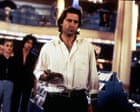
Acclaimed Australian actor Anthony LaPaglia has laid bare decades of personal turmoil, industry feuds, and acute financial distress in an unsparing new autobiography detailing his path from Adelaide to Hollywood.
The 65-year-old performer, renowned internationally for his Golden Globe-winning lead role in Without a Trace and locally for Australian cinematic landmark Lantana, pulls few punches in his candid release, titled The Life We Choose. The book charts his unlikely ascent from an unstable working-class existence in South Australia to the upper echelons of the international screen industry.
Trauma, escape and the therapeutic craft
Growing up in suburban Adelaide under the volatile shadow of his father, Egidio, LaPaglia began his adult life in decidedly unglamorous fashion, working as a shoe salesman before resolving to try his luck abroad. The performing arts offered not merely a career path, but an urgent emotional reprieve.
“They say acting is the cheapest form of therapy,” LaPaglia writes in an excerpt from the book. “And that was lucky for me, because, coming up in the way I did, Christ knows I needed it.”
His relocation to the United States yielded breakthrough work on Broadway and a steadily rising profile on prime-time television, yet the emotional scars of his upbringing remained persistent companions.
Near-misses with Tony Soprano and Tarantino clashes
Alongside domestic trauma, Guardian Australia Culture reported that the memoir delivers a rare, unvarnished glimpse behind the veneer of studio politics and creative friction. Among the most tantalising revelations is LaPaglia’s disclosure that he came remarkably close to securing the defining role of Tony Soprano—a part that ultimately transformed the late James Gandolfini into a global television icon.
The actor also recounts a combustible encounter with auteur Quentin Tarantino, who reportedly “flipped out” at LaPaglia during a tense production dispute. Such encounters underscore an industry trajectory marked by high stakes and volatile personalities, which the actor documents with startling frankness rather than customary Hollywood tact.
Addiction, disillusionment and empty pockets
The excesses of peak fame feature prominently throughout the retrospective. LaPaglia reflects vividly on his past struggles with illicit substances, at one point describing cocaine as “the Gollum of drugs” in reference to its insidious, obsessive grip on those under its influence.
Yet perhaps the most arresting disclosure for an actor whose career has spanned four decades is his current material standing. Despite commanding handsome salaries during his prolonged run on US network television and earning accolades including a Tony Award and an Emmy for Frasier, LaPaglia discloses that he is now “pretty much broke”.
The admission punctures the common assumption of enduring wealth among top-tier expatriate actors, exposing the precarious realities of long-term entertainment careers where exorbitant overheads, management cuts, and shifting personal fortunes can rapidly erode substantial earnings.
The Life We Choose emerges not merely as another chronicle of celebrity anecdote, but as a sober post-mortem of an Australian who attained the summit of American entertainment only to confront the enduring costs of early trauma and precarious fame.