
Australia faces a formidable hurdle in recruiting and training hundreds of additional personnel required to operate its planned fleet of nuclear-powered submarines under the $368 billion Aukus pact, an expert has warned.
Retired rear admiral Peter Briggs raised fresh concerns over the country’s capacity to crew the multi-billion-dollar future fleet, pointing out that workforce constraints represent one of several "huge issues" confronting the national defence apparatus, The Guardian Australia reported.
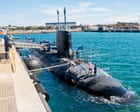
The sober assessment comes as the Virginia-class fast-attack submarine USS Colorado berthed at HMAS Stirling, south of Perth, on Tuesday. The vessel will undertake approximately a month of routine maintenance, functioning as a vital practical training ground for Australian naval and civilian technicians seeking to familiarise themselves with nuclear propulsion systems.
Training hurdles loom over fleet expansion
The Commonwealth’s transition from conventional diesel-electric Collins-class submarines to nuclear-powered platforms represents the most technically complex capability overhaul in the nation's military history.
According to The Guardian Australia, Briggs cautioned that the Royal Australian Navy must dramatically ramp up its intake to satisfy future crewing demands. Operating advanced nuclear-powered vessels requires significantly larger complements of highly specialised personnel, including nuclear-trained engineers, reactor technicians, safety marshals, and qualified submariners.
Australia’s existing fleet of six Collins-class vessels has historically struggled with crew shortages and retention bottlenecks. Moving towards an operating model requiring multiple qualified crews per hull across both acquired American Virginia-class boats and the bespoke SSN-Aukus vessels will demand an unprecedented recruitment drive across the next two decades.
Port visits test local industrial capacity
The docking of the USS Colorado at Garden Island serves as a crucial operational benchmark to evaluate whether local shore infrastructure and personnel are prepared to sustain allied nuclear vessels.
Over the course of its month-long stay in Western Australia, Australian sailors and industrial contractors will work side by side with American naval counterparts during scheduled maintenance tasks. The rotation is designed to lay the institutional groundwork for Submarine Rotational Force-West, which will see up to four US and one British nuclear submarine operating from HMAS Stirling on rotational deployments from as early as 2027.
While defence leadership has maintained that practical exposure will rapidly accelerate sovereign capability, defence analysts warn that the operational timeline leaves little room for complacency. The divide between observing external maintenance and mastering the autonomous upkeep of highly sensitive nuclear propulsion reactors remains formidable.
Mounting pressure on Defence retention targets
The personnel warning coincides with broader structural challenges confronting the Australian Defence Force, which has continually struggled to meet overall recruitment and retention targets amid a competitive domestic labour market.
Submariner recruitment remains particularly challenging due to the demanding conditions of long undersea deployments, rigorous security vetting, and intense competition from Western Australia's lucrative mining and resources sector.
Defence planners privately acknowledge that sustaining momentum for the $368 billion program will require persuading hundreds of specialised science and engineering graduates to commit to naval service. Without significant overhauls to recruitment pipelines and career incentives, observers caution the nation risks procuring an elite fleet without the necessary personnel to command it at sea.