
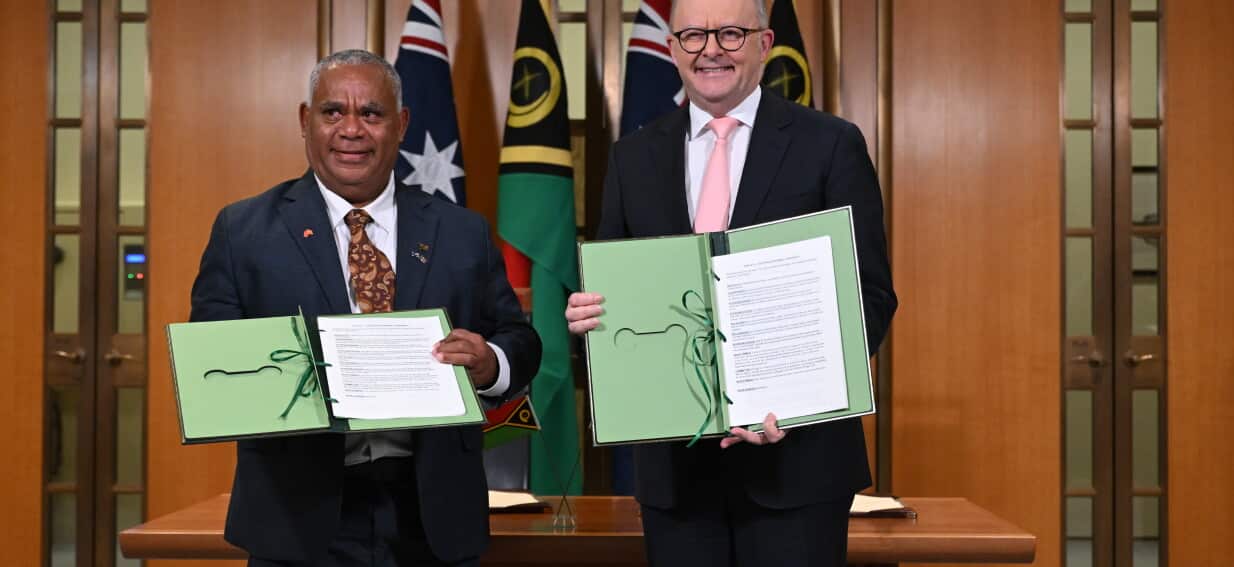
Canberra has cemented a pivotal security agreement with Vanuatu, a deal hailed as a cornerstone for enhancing stability and cooperation in the Pacific, following nearly a year of intricate negotiations.
The bilateral Security Treaty, officially inked this week, represents a significant diplomatic victory for Australia, reinforcing its role as a primary security partner in the Melanesian nation. The agreement arrives at a time of heightened geopolitical interest in the Pacific, with major global powers increasingly vying for influence in the strategically vital region.
Deepening Defence and Disaster Ties
The freshly signed treaty establishes a comprehensive framework for cooperation across a broad spectrum of security concerns, ranging from defence and law enforcement to disaster response and cyber security. While specific monetary figures associated with the deal were not immediately disclosed, its 'lucrative' nature was highlighted by SBS Australia, indicating substantial Australian investment and support for Vanuatu's national security infrastructure and capabilities.
A key pillar of the agreement focuses on deepening defence ties. This includes provisions for joint military exercises, training programs for Vanuatu's security forces, and intelligence sharing. The emphasis is on building Vanuatu's self-reliance in maintaining its internal and external security, rather than a direct military presence. From a broader perspective, the agreement is designed to create a more integrated and resilient security architecture across the Pacific, bolstering the collective ability to respond to emerging threats.
Safeguarding Regional Sovereignty
One of the treaty's most significant implications lies in its potential to safeguard regional sovereignty and prevent any single external power from dominating the Pacific. While not explicitly named, the context of increased Chinese presence and investment in various Pacific island nations provides a backdrop to the urgency and importance of such bilateral security pacts. The Australian government has consistently articulated a 'Pacific family' approach, emphasising genuine partnerships built on mutual respect and shared interests, as opposed to transactional relationships.
This agreement with Vanuatu sends a clear signal that Australia remains committed to being the security partner of choice for its Pacific neighbours. It seeks to deter actions that could compromise the sovereignty or stability of Pacific island nations, ensuring they have the resources and support to make independent decisions regarding their security and development. The treaty is also expected to foster greater maritime domain awareness, crucial for combating illegal fishing and transnational crime in the vast Pacific Ocean.
Economic and Social Development Integration
Beyond traditional security matters, the treaty also encompasses cooperation in areas vital for Vanuatu's long-term economic and social development. Provisions for climate change adaptation and disaster resilience are particularly pertinent given Vanuatu's vulnerability to natural disasters. Australia will likely provide enhanced support for disaster preparedness, response, and recovery efforts, building on existing humanitarian aid programs.
Furthermore, the agreement is anticipated to facilitate greater collaboration in areas such as cyber security capacity building, safeguarding critical infrastructure, and supporting law enforcement agencies in tackling organised crime. This holistic approach underscores Australia's recognition that true security extends beyond military might to encompass economic stability, good governance, and environmental resilience. The 'lucrative' aspect noted by SBS Australia suggests a multi-faceted package that will see significant Australian capital and expertise flow into these critical sectors in Vanuatu, ensuring a tangible benefit for the island nation's populace and long-term stability.