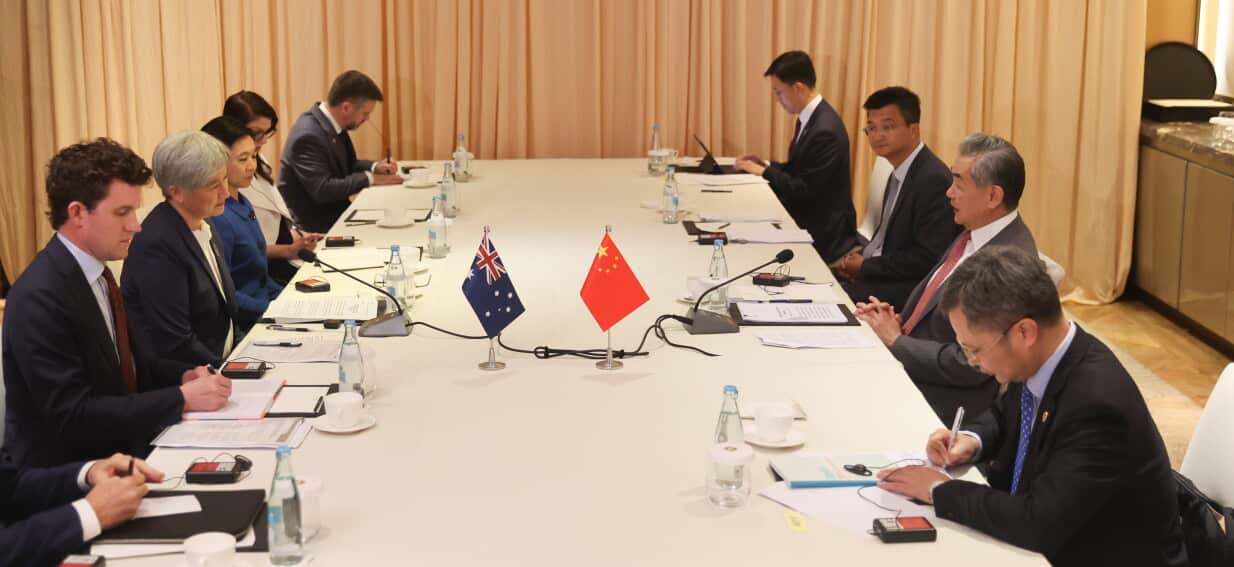
Australia has directly confronted China over its recent ballistic missile tests, with Foreign Minister Penny Wong reiterating the paramount importance of transparency and adherence to international norms during a high-level diplomatic engagement. The communication underscores Canberra's growing apprehension about military activities in the Indo-Pacific and its commitment to regional stability.
The discussions come in the wake of renewed tensions in the region, sparked by various military exercises and technological advancements. While the specific details of the ballistic missile tests were not immediately disclosed, the Australian government's swift response highlights its proactive stance on matters affecting national and regional security. SBS News Top Stories reported that Senator Wong's message to her Chinese counterpart was unequivocal, focusing on the broader implications of such actions.
Diplomacy Amidst Regional Unease
Senator Wong's direct approach reflects Australia's broader diplomatic strategy of engaging with major powers, even when disagreements arise. The Australian government has consistently advocated for open communication channels and multilateral dialogue to de-escalate tensions and foster mutual understanding. This latest exchange with China is seen as a continuation of these efforts, seeking to prevent miscalculation and misunderstanding in an increasingly complex geopolitical landscape.
The emphasis on transparency by the Australian Foreign Minister is particularly pertinent given the nature of ballistic missile technology. Such tests can be viewed as escalatory and a potential threat to regional stability if not conducted with full disclosure and in accordance with international protocols. Australia, as a significant player in the Indo-Pacific, has a vested interest in ensuring that all nations operate within a framework of predictability and accountability.
Upholding a Rules-Based Order
Australia's call for transparency is firmly rooted in its commitment to a rules-based international order. This principle is a cornerstone of Australia's foreign policy, advocating for all nations, regardless of their size or power, to adhere to international law and established norms. Ballistic missile tests, particularly those conducted without clear communication, can be perceived as undermining this order.
Canberra's position is shared by several allies and regional partners who also monitor military developments with vigilance. The collective voice for greater transparency and adherence to international law aims to build confidence and reduce the likelihood of conflict. The Australian government believes that open dialogue and clear communication are essential tools in managing complex security challenges and maintaining peace in the Indo-Pacific.
Australia's Strategic Imperatives
For Australia, maintaining a stable and secure Indo-Pacific is a central strategic imperative. The nation's economy, trade, and security are intrinsically linked to the health of the region. Any actions that destabilise the delicate balance of power or increase the risk of conflict are therefore met with serious concern. Senator Wong's communication to China underscores this fundamental Australian interest.
The government continues to invest in diplomatic capabilities and foster strong relationships across the region to navigate these challenges. While Australia seeks productive relationships with all nations, including China, it remains resolute in its commitment to upholding its values and advocating for a peaceful and prosperous Indo-Pacific. The recent dialogue serves as a reminder that Australia will continue to voice its concerns clearly and directly when its strategic interests and regional stability are at stake.