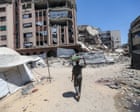
Federal police are poring over a comprehensive 61-page brief detailing alleged war crimes committed by an Australian citizen serving in the Israel Defense Forces (IDF) in Gaza. The serious allegations, which have prompted an assessment by the Australian Federal Police (AFP), stem from a detailed submission by the Australian Centre for International Justice (ACIJ).
The Guardian Australia first reported the allegations, which focus on activities of an IDF battalion across 2023 and 2024. The brief specifically outlines claims of deliberate targeting and destruction of residential buildings without military justification – actions that, if proven, contravene international humanitarian law.
Grave Accusations Against IDF Battalion
At the heart of the AFP’s current assessment are allegations surrounding an IDF battalion, understood to include an Australian citizen amongst its ranks. The ACIJ's submission to the federal police outlines a pattern of conduct in Gaza that they contend meets the threshold for war crimes. These aren't merely collateral damage claims; rather, they suggest intentional harm to non-military targets and infrastructure. The allegations paint a picture of an operational strategy that purportedly includes the systematic destruction of residential areas, raising serious questions about adherence to the principles of distinction and proportionality in armed conflict.
Under international law, the targeting of civilian objects is prohibited, and any attack must be proportionate to the military advantage gained, with all feasible precautions taken to avoid civilian casualties. The ACIJ’s brief reportedly details instances where these principles were allegedly flouted, leading to widespread destruction of homes and displacement of civilians, often without clear military objectives being achieved, according to their assessment.
Australia’s International Obligations in Focus
The AFP’s assessment of the ACIJ's brief highlights Australia’s obligations under international humanitarian law and its own domestic legislation, particularly the War Crimes Act 1945. This Act allows for the prosecution of individuals present in Australia who have committed war crimes, irrespective of where those crimes were perpetrated or their nationality. This legal framework underscores the gravity of the AFP's current inquiry.
While the AFP's current action is an assessment rather than a full-blown investigation, it signifies that the allegations are being taken seriously. The process involves evaluating the credibility of the information presented and determining whether there is sufficient evidence to warrant a formal investigation. Should the AFP proceed, it could lead to an unprecedented and complex legal challenge, requiring extensive international cooperation and evidence gathering from a conflict zone.
Calls for Accountability and Transparency
The unfolding situation has reignited calls from human rights advocates for greater accountability for actions committed during armed conflicts, particularly those involving Australian citizens. Organisations like the ACIJ argue that universal jurisdiction for war crimes means that no individual should be beyond the reach of justice, regardless of their nationality or where the alleged crimes occurred. They emphasise the importance of thorough and impartial investigations to uphold the integrity of international law.
The potential for an Australian citizen to face war crimes charges in their home country for actions undertaken while serving in a foreign military raises significant diplomatic and legal complexities. The Israeli government has consistently denied allegations of war crimes, stating that its military operations in Gaza adhere strictly to international law and are aimed at dismantling Hamas. However, the international community continues to scrutinise the conduct of all parties embroiled in the conflict. The outcome of the AFP’s assessment will be keenly watched, both domestically and internationally, as it sets a precedent for how Australia addresses such grave allegations.