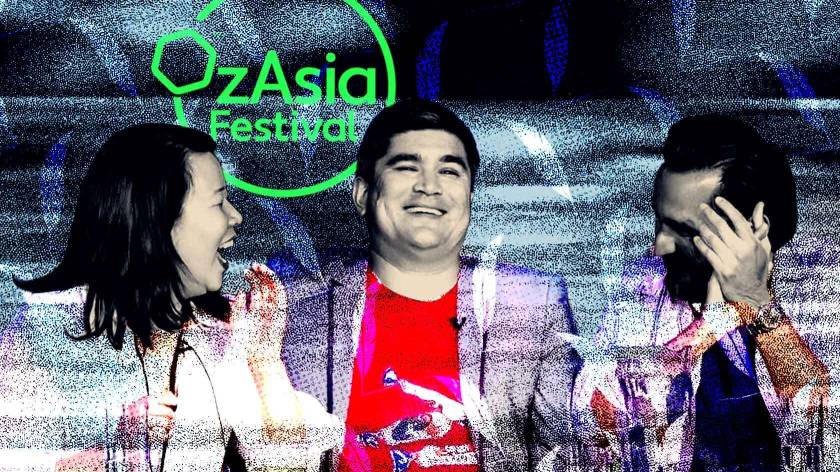
The potential loss of dedicated cultural platforms such as the OzAsia Festival risks forcing minority artists back into tokenistic roles, eroding decades of hard-fought progress across Australia’s performing arts sector.
Concerns surrounding the future viability of targeted multicultural festivals have deepened amid broader financial austerity across state-funded institutions. As independent outlet Crikey reported, dismantling or curtailing an event of OzAsia’s scale inflicts a distinct psychological and professional toll on minority creatives, stripping away spaces where non-white performers are permitted to be multifaceted rather than symbolic.
The burden of being the singular voice
For nearly two decades, Adelaide’s OzAsia Festival has functioned as an essential bridge between Australia and the Asia-Pacific, showcasing contemporary dance, theatre, visual arts, and literature. Beyond sheer programming numbers, its core structural value lies in volume: by presenting dozens of Asian creators simultaneously, the festival relieves individuals of the exhausting pressure to represent an entire diaspora.
Crikey reported that within mainstream institutions, Asian-Australian practitioners frequently face the impossible responsibility of acting as the definitive voice for a vast and complex continent. In contrast, dedicated festivals provide safety in numbers. When artists share a bill with peers from across Seoul, Singapore, Sydney, and regional Australia, they are liberated from cultural education duties and allowed simply to make art.
Tightening belts across state cultural portfolios
The debate arrives as cultural institutions nationwide grapple with escalating production costs, stagnant philanthropic funding, and shifting government priorities. While flagship performing arts organisations have faced shrinking bottom lines, diversity-led initiatives often remain acutely vulnerable to rationalisation.
Across state jurisdictions, festival boards are weighing whether dedicated diversity programs should be integrated into general seasonal offerings rather than sustained as standalone fixtures. Yet industry observers warn that such mainstreaming rarely achieves equivalent depth. In practice, standalone festivals maintain ring-fenced budgets and bespoke audience outreach that general programs routinely fail to replicate.
Mainstream institutions risk a return to tokenism
Without the concentrated platform offered by specialised events, minority artists face an uphill battle against institutional inertia. Mainstream programming in Australian theatre, classical music, and the visual arts continues to skew heavily towards Eurocentric traditions, frequently relegating non-white works to tokenised slots or specific calendar observances.
When minority creators are restricted to singular programming slots, their work is subjected to disproportionate scrutiny. A solitary production must satisfy demands for cultural authenticity, commercial accessibility, and critical prestige, leaving little room for experimental risk or creative failure.
Endangering connections across the Indo-Pacific
Beyond the domestic artistic community, axing or diminishing an institution like OzAsia damages Australia’s broader diplomatic and cultural soft power in the region. Dedicated festivals serve as long-term incubators for international co-commissions, bilateral artist residencies, and cross-cultural dialogue that rarely develop through commercial tours alone.
Losing such platforms risks shrinking Australia’s cultural horizon at precisely the moment the nation seeks deeper regional integration. For Asian-Australian practitioners, the stakes remain profoundly personal: the difference between thriving within an expansive creative community and returning to the margins of the national stage.