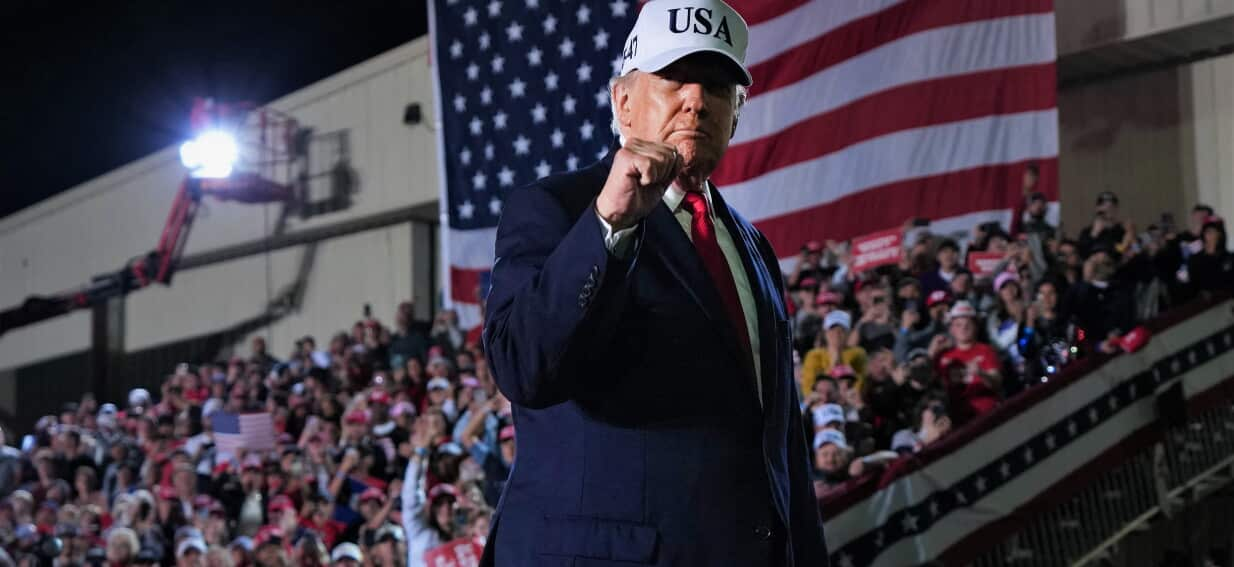
Millions of Americans have begun casting ballots in critical mid-term elections that will reshape Congress, dictate Donald Trump’s political fortunes, and test the resilience of the nation’s increasingly polarised democratic institutions.
While all 435 seats in the House of Representatives and more than a third of the Senate are being contested, the poll serves as a high-stakes referendum on the broader direction of American governance. With voter turnout projected to reach historic highs in several jurisdictions, both major parties spent the final hours of campaigning attempting to energise their bases across a fiercely contested electoral map.
Republicans brace for lower-house setback
Final polling analysed by SBS News Top Stories suggests the Republican Party is positioned to lose its working majority in the House of Representatives. Such an outcome would dismantle the legislative pathway for conservative policy priorities and empower Democrats with sweeping committee gavels, budgetary leverage, and oversight powers.
Historical trends typically disfavour the party occupying the White House during mid-term cycles, yet unusual volatility across suburban districts has complicated traditional modelling. Moderate voters, particularly in key suburban electorates surrounding cities such as Philadelphia and Phoenix, appear motivated by economic pressures alongside contentious social debates. For party strategists, maintaining discipline among working-class voters has become paramount as suburban support shows signs of structural drift.
Razor-thin margins across key Senate battlegrounds
In contrast to the expected shift in the lower chamber, the contest for control of the 100-seat Senate remains exceptionally tight. SBS News Top Stories reported that pivotal races across half a dozen battleground states are currently running within the statistical margin of error, leaving the fate of the upper house balanced on a knife-edge.
Electoral showdowns in perennial swing states—including Pennsylvania, Georgia, Nevada, and Arizona—have drawn record-breaking financial expenditure, with billions of dollars pouring into advertising blitzes. The composition of the Senate remains crucial not only for advancing primary legislation, but for confirming federal judges, cabinet nominees, and ambassadorial appointments over the coming two years.
Trump’s authority faces decisive electoral test
Looming over the entire contest is the political shadow of Donald Trump. Having endorsed dozens of controversial, anti-establishment contenders throughout the primaries, the former president has tied his personal brand directly to the outcome of these races.
A strong performance by his preferred slate would cement his authority over the Republican apparatus, providing significant momentum ahead of an anticipated presidential campaign. Conversely, high-profile defeats in winnable Senate contests could embolden internal party rivals seeking to pivot towards a fresh generation of conservative leadership.
Global ramifications and the view from Canberra
For international observers, including policymakers in Canberra, the prospect of an ideologically divided Washington carries immediate geopolitical consequences. A gridlocked Congress frequently shifts administrative focus toward foreign policy, altering trade rhetoric and global security commitments.
Australian financial markets are also monitoring the vote closely. Analysts note that heightened political uncertainty in Washington often ripples through global capital flows, influencing commodity pricing and driving volatility in the Australian dollar against the greenback. As counting gets underway, the world watches to see whether American voters deliver wholesale institutional paralysis or a mandate for further political disruption.