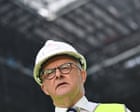
Melbourne, Australia – Victorian Premier Jacinta Allan has staunchly defended the state’s audacious $100 billion Big Build infrastructure program, batting away growing calls for a royal commission into alleged corruption and spiralling costs. Her resolute stance comes in the wake of bombshell media reports alleging integrity issues and significant financial mismanagement within the monumental undertaking.
Speaking publicly, Premier Allan firmly declared that the "inflationary pressures on projects is not corruption," pushing back against mounting scrutiny. She maintained that the astronomical rise in project expenses was a symptom of a broader economic climate, rather than systemic wrongdoing, as critics and recent investigations suggest.
Allegations Rock Infrastructure Giant
The pressure on the Victorian government intensified significantly after a joint investigation by Nine newspapers and the popular current affairs program 60 Minutes. The comprehensive report, The Guardian Australia noted, unveiled concerning allegations that funds from the state’s Big Build projects were purportedly being funnelled to organised crime figures. Furthermore, the investigation claimed that the state government had received prior warnings regarding inevitable cost blowouts, which were allegedly linked to demands emanating from the powerful Construction, Forestry and Maritime Employees Union (CFMEU).
These revelations have cast a long shadow over a cornerstone of the Labor government's agenda, prompting widespread public concern and calls for greater transparency. The Big Build encompasses a vast array of critical infrastructure, from major road and rail upgrades to new hospitals, all designed to transform Victoria’s transport network and public services. However, the sheer scale and cost of these projects have made them a frequent target for critics, even before the latest allegations surfaced.
Union Influence Under the Microscope
The alleged nexus between union demands and ballooning project costs is a particularly contentious point. The CFMEU, a formidable force within the construction industry, has long been a powerful voice for workers' rights and conditions. However, the media investigation's suggestion that their influence may have contributed to financial irregularities introduces a new dimension to the ongoing debate about industrial relations and government contracts. While specific details of the alleged demands and their impact on costs remain under intense scrutiny, the implication of undue influence has ignited a fierce debate about the governance of large-scale public works.
Industry insiders and political commentators have often pointed to the intricacies of major infrastructure projects, citing unforeseen challenges, material shortages, and labour market pressures as common drivers of cost overruns. Premier Allan’s office has consistently highlighted global supply chain issues and a competitive construction market as key contributors to the Big Build’s escalating budget.
Calls For A Royal Commission Amplify
Opposition parties and independent watchdogs have seized upon the investigative reports, amplifying their demands for an independent royal commission to thoroughly examine the integrity and financial probity of the Big Build. They argue that only a royal commission, with its broad powers to compel evidence and summon witnesses, can adequately address the gravity of the allegations and restore public confidence. Critics contend that merely attributing cost overruns to inflation is an insufficient response to claims of potential corruption and organised crime involvement.
Premier Allan, however, remains unyielding. Her government's steadfast refusal to entertain a royal commission underscores a deep-seated belief that existing oversight mechanisms are sufficient to address any legitimate concerns. The government maintains that transparent procurement processes and robust auditing procedures are already in place to safeguard public funds. Nonetheless, as the headlines continue to dominate the news cycle and the cost of the Big Build continues its upward trajectory, the pressure on the government to provide more comprehensive answers is unlikely to abate. The political stakes are undeniably high, with the reputation of a generational infrastructure program, and indeed the government itself, hanging in the balance.