
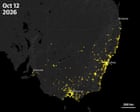
Millions of endangered bogong moths have swept across eastern Australia in an astonishing seasonal resurgence, offering vital relief to fragile alpine ecosystems following years of catastrophic climate-driven population collapses.
Sightings of the iconic brown nocturnal migrants have surged across New South Wales, Victoria, the Australian Capital Territory, and Queensland in recent weeks. As reported by The Guardian Australia, while definitive counts from ecologist-led field surveys remain pending, an influx of observational data generated by citizen scientists indicates the species is staging a major comeback across the eastern seaboard.
Interactive mapping and community tracking platforms have recorded thousands of encounters, capturing the moths fluttering around suburban porch lights, entering office towers, and gathering in dense swarms along their ancient migratory corridors towards the Snowy Mountains.
Citizen science charts a dramatic resurgence
For urban residents, the sudden influx of bogongs—often drawn off-course by artificial light pollution in Canberra, Sydney, and regional centres—has served as the most visible evidence in years of an ecological rebound.
Ecologists and conservation networks have increasingly relied on public reporting mechanisms to monitor the phenomenon in real time. The Guardian Australia reported that mapping compiled from these community submissions illustrates a dramatic population explosion compared to the barren migrations of recent springs.
The widespread community data collection provides valuable preliminary benchmarks ahead of formal spring and summer audits at alpine aestivation sites, where the insects traditionally shelter in granite boulder fields to escape the summer heat.
A lifeline for alpine ecosystems
The resurgence carries profound consequences for the biodiversity of the Australian Alps. Bogong moths represent the single most important seasonal nutritional pulse for the high country, transporting hundreds of tonnes of rich fat and protein from inland breeding plains directly into alpine habitats.
Foremost among the beneficiaries is the critically endangered mountain pygmy-possum. The tiny marsupial relies heavily on the arrival of bogongs to replenish fat reserves after winter hibernation and to successfully nurse newborn litters throughout spring.
During the severe drought years between 2017 and 2019, the near-total absence of moths led to documented litter abandonment and starvation among alpine possum colonies, underscoring the delicate ecological interdependence linking inland weather patterns to high-altitude survival.
The long road back from the brink
The species' precipitous decline prompted the International Union for Conservation of Nature to formally classify the bogong moth as endangered in 2021. Historic estimates once placed annual migrating populations in the billions, but consecutive years of record-breaking inland drought, extreme heatwaves, and the devastating 2019–20 Black Summer bushfires destroyed vast breeding habitats across the Murray-Darling basin.
Subsequent wetter seasons delivered heavy rainfall and lush agricultural pastures across inland breeding grounds, laying the ecological foundation for the current reproductive boom.
Yet scientists caution that a single bumper season does not guarantee permanent recovery. Light pollution, agricultural pesticide exposure, and the long-term threat of intensifying climate change continue to cloud the species' future. For now, however, the heavy flutter of bogong wings across the eastern states signals a much-needed reprieve for Australia’s vulnerable alpine biodiversity.


