
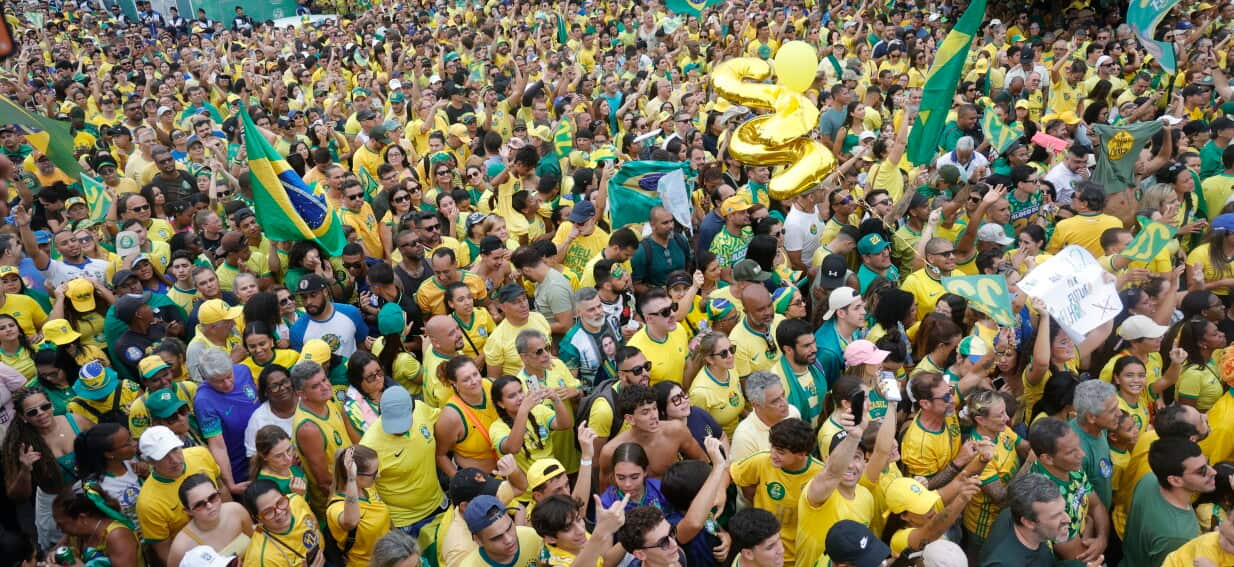
Tens of thousands of impassioned demonstrators have taken to the streets across Brazil as the deeply polarised South American nation prepares for a knife-edge presidential runoff election this Sunday.
The massive public demonstrations, held across major metropolitan centres including São Paulo and Rio de Janeiro, reflect a fraught political atmosphere ahead of what observers describe as one of the most consequential democratic tests in Latin America’s modern history. SBS News Top Stories reported that polling ahead of the vote indicates an exceptionally tight race between former president Luiz Inácio Lula da Silva and conservative challenger Flávio Bolsonaro.
Rallies lay bare deep societal fractures
Boulevards across the country were inundated over the weekend with swathes of rival partisans waving flags, chanting slogans, and holding competing rallies that effectively brought key municipal districts to a standstill.
Supporters of Lula gathered in red attire, emphasising themes of social welfare, poverty reduction, and environmental stewardship. In contrast, loyalists of Bolsonaro turned out in the national yellow and green colours, rallying around conservative social values, fiscal deregulation, and institutional law enforcement.
While the demonstrations remained largely peaceful despite heavy policing, authorities across several states were deployed in elevated numbers to prevent clashes between opposing factions. Security personnel maintained cordons in key civic plazas, underscoring the delicate balance between public assembly and the ever-present threat of civil disorder.
Tight polling sets stage for tense ballot
According to reports from SBS News Top Stories, recent opinion surveys show the two contenders locked in a statistical dead heat, leaving both political camps fighting aggressively for undecided voters in the election's closing hours.
The razor-thin margins have injected intense volatility into the campaign’s closing stages. Analysts note that voter turnout will prove decisive, particularly across Brazil’s urban hubs and historically contested rural regions, where economic recovery and soaring living costs remain the dominant voter concerns.
The contest has also been defined by a bruising war of attrition across broadcast media and digital networks. Both campaigns have traded accusations over economic management and democratic integrity, with independent observers warning that a narrow margin of victory could lead to challenges over the legitimacy of the final tally.
International observers monitor regional fallout
The outcome carries profound geopolitical implications that extend well beyond Brasília. As Latin America’s largest economy, Brazil’s diplomatic direction and trade policies reverberate globally, including for major trading partners throughout the Asia-Pacific region.
Commodities markets, agricultural supply chains, and international agreements governing the protection of the Amazon basin remain intimately tied to the ideological posture of the incoming administration. A shift in executive leadership will inevitably recalibrate relations with both Western capitals and developing trading blocs.
With polling booths scheduled to open on Sunday morning, electoral authorities have urged calm and reiterated their confidence in the transparency of the electronic voting apparatus, even as a nation of more than 200 million people braces for an anxious and protracted count.


