
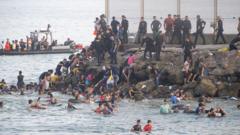
Brussels is ringing alarm bells over the escalating migrant crisis, with European Commission President Ursula von der Leyen spearheading calls for a more robust defence of the bloc's external frontiers. The urgent plea comes ahead of a critical meeting of EU interior ministers, convened to tackle the contentious issue following a significant influx of migrants into Spain's North African enclave of Ceuta.
While the specific figures of the recent surge remain fluid, reports indicate thousands of individuals, including many minors, attempted to cross into Ceuta from Morocco in recent weeks. The dramatic scenes, widely circulated across international media, have reignited fierce debates within the EU regarding shared responsibility, border security, and humanitarian obligations. The incident has put immense pressure on Spain, a frontline state in Europe's ongoing migration challenges, and by extension, on the entire European Union's cohesive approach to such issues.
Ceuta Crossings Spark European Concern
The recent events in Ceuta have not only exposed vulnerabilities in Europe's border security but have also highlighted the complex geopolitical dynamics at play between the EU and its neighbours. The Spanish government, grappling with the immediate humanitarian and logistical challenges, has been vocal in its call for greater European solidarity and practical assistance. The sudden surge has prompted concerns among EU leaders that similar situations could arise elsewhere, particularly along other Mediterranean routes or at the bloc's eastern borders, further straining resources and political will. The sheer volume of recent arrivals into Ceuta is understood to be one of the largest single influxes in recent memory, according to BBC World reports, underscoring the urgency of the situation.
Australia's Watchful Eye on EU Policy
For Australia, a nation with its own contentious history of border protection policies, the developments in Europe are being watched with keen interest. Canberra has long maintained a staunch stance on sovereign borders and unauthorised maritime arrivals, often citing the need to prevent loss of life at sea and combat human trafficking. While the geographic and geopolitical contexts differ significantly, the fundamental challenges of managing irregular migration flows, balancing security with humanitarian concerns, and forging international cooperation resonate strongly with Australian policymakers. The EU's discussions around external border enforcement, asylum processing, and return agreements will undoubtedly be scrutinised for potential lessons or cautionary tales that might inform Australia's ongoing immigration debates, particularly given global trends in displacement and economic migration.
A Test of EU Unity and Resolve
President von der Leyen's directive for stronger borders signals a renewed emphasis on collective security and an acknowledgement that individual member states cannot shoulder the burden alone. The upcoming interior ministers' meeting is expected to explore various measures, ranging from increased funding for border agencies like Frontex to enhanced cooperation with third countries on return agreements. However, achieving a unified front will be no small feat. Member states often hold divergent views on migration policy, with some advocating for more open and humanitarian approaches, while others prioritise strict enforcement and reduced intake. The outcomes of these high-stakes discussions will not only determine the immediate response to the Ceuta crisis but will also shape the future trajectory of the EU's migration policy for years to come, testing the bloc's unity and its ability to respond effectively to complex, transnational challenges.