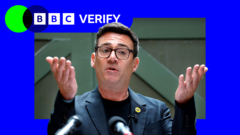
Andy Burnham, the high-profile Mayor of Greater Manchester, has unveiled a compelling vision to fundamentally reshape the United Kingdom, moving beyond traditional Westminster-centric governance. Dubbed 'Manchesterism', this ambitious blueprint, as reported by BBC Business, proposes a radical devolution of power and wealth, fundamentally challenging the established order.
Burnham’s recent address outlined a stark departure from the current economic and political modèle, advocating for a more decentralised, regionally focused approach. He argues that the UK’s persistent regional inequalities and over-reliance on London are unsustainable, hindering national progress and fostering a sense of disenfranchisement outside the capital. His 'Manchesterism' aims to empower local communities and regional authorities, granting them greater control over their economic destinies and public services.
The Heart of the 'Manchesterism' Doctrine
At its core, 'Manchesterism' champions a significant transfer of decision-making and financial resources from central government to regional hubs. This includes greater autonomy over infrastructure spending, skills development, and even elements of industrial strategy. Burnham envisions a network of powerful city-regions, each with the tools and influence to tailor policies to their unique needs and maximise their economic potential. This stands in stark contrast to what he perceives as a 'one-size-fits-all' approach emanating from Westminster.
The BBC Business analysis highlighted Burnham’s emphasis on public transport integration, affordable housing, and a significant uplift in public sector investment – areas often seen as neglected outside London. He has previously demonstrated this commitment in Greater Manchester with initiatives like the integrated Bee Network bus service and plans for social housing projects. The proposition suggests extending this localised, integrated approach across the nation, creating a more equitable distribution of opportunity and prosperity.
Unanswered Questions on Funding and Detail
While the overarching principles of 'Manchesterism' have resonated with many, particularly those frustrated by regional disparities, BBC Business cautioned that significant gaps remain concerning the finer details of its implementation. A key concern revolves around how such a massive transfer of power and resources would be funded. Critics have pointed out that substantial investment would be required to bring regional infrastructure and public services up to par, and the source of these funds – whether through increased national taxation, regional levies, or a reallocation of existing budgets – remains largely undefined.
Furthermore, the exact mechanisms for accountability and oversight in this devolved system are yet to be thoroughly articulated. While the idea of empowering local leaders is popular, ensuring robust democratic scrutiny and preventing fragmented or inconsistent policy across regions would be crucial for its success.
A Broader Vision vs. Political Realities
Burnham's vision extends beyond mere economic policy; it encompasses a broader societal shift towards greater community involvement and a more inclusive political dialogue. He suggests that by empowering regions, the UK can foster a stronger sense of local identity and collective purpose, addressing feelings of marginalisation that have fuelled political divisions.
However, the political hurdles to implementing 'Manchesterism' across the entire UK are formidable. It would require a wholesale re-evaluation of the relationship between central government and local authorities, potentially clashing with established departmental interests and political rivalries. While BBC Business notes the compelling narrative, translating this ambitious vision into a concrete, nationwide policy framework will require extensive negotiation, legislative reform, and a clear, detailed roadmap – elements that are, for now, still largely aspirational.