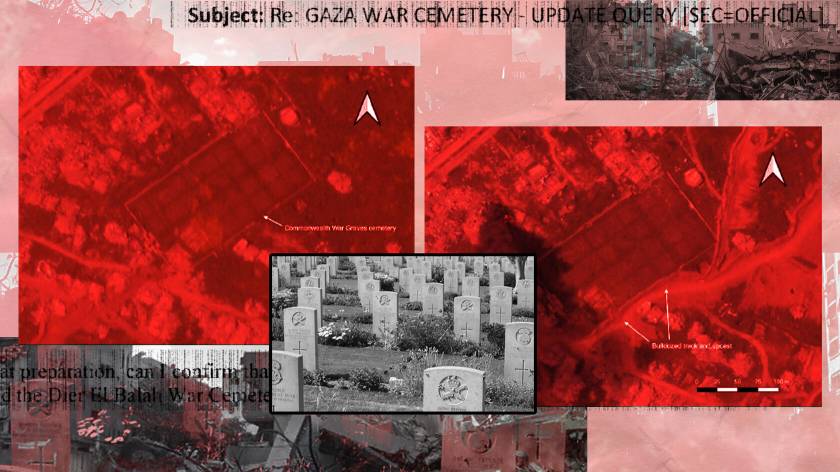
The Department of Foreign Affairs and Trade withheld internal correspondence detailing the destruction of a Commonwealth war cemetery in Gaza for months, claiming the request was too complex despite the details already being public.
According to a report by independent news outlet Crikey, departmental officials took months to process a Freedom of Information application regarding the historic burial site, which holds the remains of Australian service personnel who died during the First and Second World Wars.
While the department justified the extended delay by designating the processing of the files as unusually complex, the bulk of the documents eventually released consisted of material that senior officials had already canvassed during parliamentary Senate estimates hearings.
FOI delays over previously disclosed material
The prolonged timeline highlights ongoing tensions surrounding the Commonwealth's access-to-information framework. Under federal freedom of information laws, government agencies are required to respond to requests within statutory deadlines unless formal extensions for complexity or third-party consultations are secured.
Crikey reported that despite the department's insistence on the delicate and complicated nature of the file, the disclosure contained minimal new substantive details. Instead, the emails mirrored explanations provided months earlier by diplomats under questioning from senators in Canberra, prompting criticism that the administrative hold-up served only to shield routine departmental communications from timely public scrutiny.
Transparency advocates have frequently noted that Commonwealth agencies resort to claims of administrative burden or sensitivity to push back release dates for politically fraught files, particularly those touching on foreign affairs and international conflicts.
Commonwealth graves caught in Gaza conflict
The cemetery in question, administered by the Commonwealth War Graves Commission, is situated in the Gaza Strip and contains the graves of dozens of Australian soldiers, predominantly Anzac light horsemen who fell during the Sinai and Palestine campaigns in 1917.
Satellite imagery and verified ground footage that emerged earlier in the Israel-Hamas war demonstrated extensive earthmoving, cratering, and tracked vehicle damage across the grounds of the cemetery during operations by the Israel Defense Forces.
The damage sparked immediate distress among veterans' organisations and family descendants in Australia, prompting parliamentarians to press the federal government on what representations Australian diplomats had made to Israeli counterparts regarding the sanctity of war graves protected under international humanitarian law.
Bureaucratic hurdles draw transparency concerns
The bureaucratic handling of the document release comes amid heightened scrutiny over how Canberra manages public disclosure surrounding the conflict in the Middle East. Media organisations and legal analysts have repeatedly warned of an institutional culture within the public service that reflexively classifies and delays sensitive diplomatic material, even when factual summaries have already been acknowledged in public hearings.
The Office of the Australian Information Commissioner has previously highlighted chronic delays across the Commonwealth bureaucracy, warning that excessive recourse to extension mechanisms undermines the fundamental purpose of open government.
While the federal government maintains that it treats the protection of war graves with utmost solemnity and engages constructively with transparency processes, the protracted withholding of previously known facts continues to fuel debate over Canberra's approach to FOI administration.