
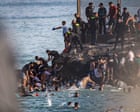
The tranquil shores of Ceuta, a tiny Spanish enclave on Africa's northern coast, transformed into a scene of chaotic desperation last week as tens of thousands of migrants, including many children, surged across the border from Morocco. This unprecedented influx, which Reuters World reported led to dozens of deaths, has not only plunged Spain into a profound political crisis but also amplified existing tensions and disagreements among European nations regarding migration policy.
Images of families wading through the sea, some clutching inflatable rings, and others being pulled ashore by Spanish soldiers, have shocked the world. The sheer scale of the migration – an estimated 50,000 individuals in a matter of days – overwhelmed local authorities and resources, prompting an urgent response from Madrid. The Spanish government quickly deployed military personnel to the border and began the arduous process of returning many of the new arrivals to Morocco, a move that drew both praise and condemnation.
A Calculated Geopolitical Chess Move
The sudden surge of migrants is widely viewed as a deliberate tactic by Morocco, seemingly in retaliation for Spain's decision to provide medical treatment to Brahim Ghali, the leader of the Polisario Front, a Western Sahara independence movement. Ghali, who was suffering from COVID-19, was admitted to a Spanish hospital, a move Morocco deemed unacceptable. This diplomatic spat escalated rapidly, with Rabat effectively loosening its border controls, allowing thousands to attempt the perilous journey into Ceuta. This strategic leveraging of human lives as a geopolitical bargaining chip has been heavily criticised internationally, highlighting the vulnerability of border communities caught in the crossfire of international disputes.
European Solidarity Under Strain
The crisis in Ceuta has reverberated across the European Union, exposing the fault lines in its much-debated common migration policy. While some EU leaders expressed solidarity with Spain and offered support, others were quick to voice their concerns about border security and the potential for similar events to destabilise other member states. The Guardian’s European community affairs correspondent, Ashifa Kassam, noted the sharp contrast in reactions, underscoring the ongoing struggle to forge a unified approach to migration challenges. Countries on the EU's southern periphery, such as Italy and Greece, often bear the brunt of migrant arrivals and have long called for greater burden-sharing and a more robust common strategy.
The Human Cost and Future Challenges
Beyond the political machinations, the human cost of the Ceuta crisis is immeasurable. Dozens perished in the treacherous waters, and many more arrived traumatised and in need of humanitarian assistance. The long-term implications for the thousands of individuals who made the journey, particularly unaccompanied minors, remain a significant concern. Spain, now facing the monumental task of processing asylum claims and managing returns, has also been forced to reassess its relationship with Morocco and its broader foreign policy. The incident serves as a stark reminder that as global inequalities persist and geopolitical tensions simmer, the pressure on Europe's borders is unlikely to abate. The cost of inaction, both in human lives and political stability, is a burden the continent can ill afford.