
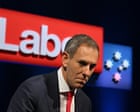
Treasurer Jim Chalmers is confronting an increasingly delicate economic balancing act as Treasury officials move to downgrade growth projections and pencil in higher unemployment ahead of December’s mid-year budget review.
The deteriorating outlook places the federal government in an acute policy bind, where remedies designed to suppress stubborn inflation threaten to deepen the slowdown across the broader economy, while stimulus risks rekindling price pressures.
Diminishing economic momentum
The domestic economy has entered a protracted period of sluggish activity, weighed down by higher borrowing costs and persistent cost-of-living strains on household balance sheets. While the Treasurer offered cautious reassurance in an address last week that economic conditions would improve marginally within twelve months, fresh administrative signals indicate the immediate road ahead will prove more hazardous.
Recent macroeconomic indicators demonstrate that gross domestic product growth has slowed to a crawl, sustained largely by population expansion rather than underlying consumer demand. Simultaneously, the resilient labour market that has anchored Australia's post-pandemic recovery is beginning to show distinct fissures, with joblessness anticipated to tick upward as corporate margins tighten and business insolvencies rise across multiple sectors.
The mid-year forecast revision
Treasury officials in Canberra are now actively revising baseline forecasts before the release of the Mid-Year Economic and Fiscal Outlook (MYEFO), as reported by The Guardian Australia. The revisions are expected to formally record lower domestic expansion and elevated unemployment rates compared to the estimates tabled in May’s federal budget.
The impending downgrades reflect a difficult global macroeconomic environment burdened by geopolitical friction and elevated interest rates, compounded by persistent weakness across key trading partners. For Australian households, the practical consequence is an extended period where real disposable incomes remain flat, even as headline inflation figures slowly moderate towards the Reserve Bank of Australia’s target band of 2 to 3 per cent.
A narrowing fiscal corridor
The shifting landscape leaves Dr Chalmers with minimal room to manoeuvre. Any aggressive policy response designed to shore up employment or cushion household distress risks working against the central bank's inflation-fighting mandate. Conversely, pursuing deeper fiscal restraint to assist monetary policy could easily drag the country into outright economic stagnation.
Compounding these difficulties is the ongoing erosion of the cyclical revenue windfalls that previously buttressed federal balance sheets. With commodity prices cooling from historic peaks and company tax receipts softening in tandem with corporate profits, the fiscal cushions that delivered back-to-back budget surpluses are rapidly deflating.
As the government prepares its mid-year financial disclosures, the Treasurer faces a stark political and structural reality: the economic levers available are fraught with trade-offs, and relief for the Australian economy remains contingent on an uncommonly delicate landing.


