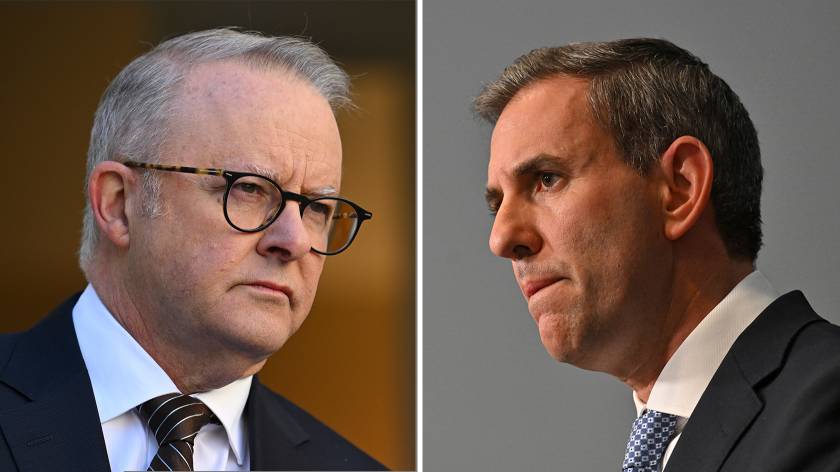
Treasurer Jim Chalmers faces an intensifying campaign to shoulder the political fallout for elevated inflation, as commentary increasingly frames the Reserve Bank’s monetary tightening cycle as a failure of federal policy.
Political crosshairs fix on the Treasury bench
An entrenched narrative has taken hold within domestic media and political circles, systematically positioning the Albanese government to wear the public backlash from stubborn price pressures. Crikey reported that internal and external commentators have sought to ensure the Treasurer absorbs the domestic pain of monetary tightening, turning inflation into an exclusively partisan liability.
Rather than viewing the path of interest rates as the complex product of post-pandemic dislocations, global energy markets, and structural labour shortages, political coverage has increasingly contracted into a direct referendum on Canberra's economic stewardship. The result is a media environment primed to hold federal cabinet responsible whenever central bank policy squeezes households.
The mechanics of a self-fulfilling narrative
This evolving coverage operates as a self-fulfilling prophecy, Crikey observed, propelled by political insiders keen to establish an orthodoxy where the government is inherently at fault for cost-of-living distress. Once editorial consensus dictates that government policy is the primary engine of inflation, every subsequent piece of economic data is viewed through that singular prism.
Under this dynamic, any hawkish commentary from the Reserve Bank board at Martin Place is treated not as an independent assessment of broad financial conditions, but as a rebuke of Treasury. Consequently, public scrutiny has drifted away from commercial pricing power or imported cost shocks, resting almost entirely on ministerial decision-making.
Fiscal restraint versus monetary reality
The Albanese administration has routinely defended its economic strategy, arguing that back-to-back budget surpluses and modest, targeted subsidies were calibrated to insulate vulnerable citizens without overheating demand. Treasury analysis has historically presented interventions such as energy rebates and rent assistance as measures designed to lower headline consumer price index figures.
Yet critics maintain that aggregate public expenditure remains too elevated to complement the central bank's restrictive policy. With state and federal capital programmes operating at full tilt across the eastern seaboard, opponents have continued to claim that fiscal policy is running at cross-purposes with monetary objectives, leaving the Reserve Bank with little choice but to hold rates higher for longer.
Competing pressures across the central bank divide
The dispute highlights the persistent institutional friction between elected lawmakers and central bankers. While the monetary authority possesses only blunt instruments to compress consumer spending, the federal government must balance social equity, infrastructure commitments, and public sector capacity against broader economic equilibrium.
By flattening this nuanced divide into a convenient political blame game, the debate risks obscuring the structural challenges facing the Australian economy. For Dr Chalmers, navigating this hostile messaging environment will require defending the integrity of federal fiscal policy while bracing for voter discontent that shows little sign of abating.