
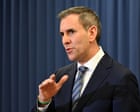
Australians face a darkening economic horizon, with the federal government preparing to downgrade official forecasts for growth and employment amid bruising interest rate rises and stubborn inflation pressures.
Treasurer Jim Chalmers revealed that December’s Mid-Year Economic and Fiscal Outlook (MYEFO) will reflect a distinctly weaker climate, as the compounding effects of restrictive monetary policy take a firmer grip across the national economy.
Mid-year review downgrades outlook
Treasury is undertaking a wholesale revision of its economic indicators, with independent economists and policymakers alike warning that the country faces a particularly fraught six months ahead.
In an address scheduled for Friday morning, Dr Chalmers is expected to offer a sobering assessment of conditions facing households and industry, pointing directly to the delayed drag of higher borrowing costs.
"Higher inflation is putting people under pressure, tighter monetary policy is weighing on domestic activity, and we can see that in the softening of the labour market," Dr Chalmers will say, as reported by The Guardian Australia.
The recalibrated Treasury figures will formally adjust projections for gross domestic product downwards while predicting a notable uptick in joblessness, reversing some of the historic gains recorded during the post-pandemic recovery.
RBA tightening hits household demand
The political and economic warnings arrive just days after senior officials at the Reserve Bank of Australia raised the spectre of another cash rate increase. With the central bank’s board meeting looming in less than a fortnight, market participants are bracing for the risk of further policy tightening designed to tame persistent service-sector inflation.
The central bank's aggressive cycle of rate increases over the past 18 months has steadily drained household savings buffers and subdued discretionary retail spending. While the national labour market had previously exhibited remarkable resilience, recent data indicates that vacancies are falling and the pace of employment growth is tapering off.
Economists have increasingly cautioned that the transmission of past interest rate rises is now hitting the real economy in earnest. Mortgage holders rolling off fixed-rate facilities onto significantly higher variable terms continue to experience substantial reductions in disposable cash flow.
Balancing fiscal discipline and cost-of-living relief
For the Albanese government, the deteriorating forecasts present an acute fiscal and narrative challenge. While the Commonwealth notched a rare budget surplus in the previous financial year, driven largely by elevated commodity export receipts and strong income tax collections, the approaching economic slowdown will constrain revenue while expanding automatic welfare outlays.
Dr Chalmers has consistently maintained that the federal budget must balance targeted cost-of-living support with disciplined restraint so as not to stoke additional inflationary impulses. However, with consumer confidence languishing and business investment expectations cooling, the pressure on Canberra to navigate a narrow path between recession and inflation is intensifying.
As Treasury finalises the revised numbers ahead of the mid-year presentation, the federal government faces the difficult task of managing public expectations, reassuring financial markets, and sustaining an increasingly fragile economic expansion.


