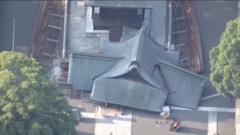
A powerful magnitude 6.4 earthquake has sent shockwaves across Japan's southwestern Kyushu island, with dramatic video footage capturing the immediate, terrifying impact. The seismic event, which struck on July 28, has prompted a swift response from authorities as residents grapple with the aftermath.
The earthquake, occurring at approximately 6:00 PM AEST (5:00 PM JST), was centred off the coast of Miyazaki Prefecture, a region known for its picturesque landscapes and active volcanic areas. While initial reports did not indicate a tsunami threat, the sheer force of the tremor was enough to cause significant alarm and disruption.
Unsettling Visuals Emerge
BBC World reported the circulation of numerous videos online, showing the raw moments the quake hit various locations across Kyushu. One particularly chilling clip, reportedly from a convenience store in Miyazaki City, depicted shelves violently shaking, sending products crashing to the floor as customers scrambled for cover. Another video, from what appeared to be an office building, showed light fixtures swaying precariously and office equipment sliding across polished floors, underscoring the intensity of the seismic activity.
These visual accounts serve as a stark reminder of the sudden and destructive power of earthquakes, a frequent occurrence in Japan due to its position on the Pacific Ring of Fire. Local media outlets quickly followed suit, broadcasting similar scenes of chaos and the immediate aftermath across their news bulletins.
Infrastructure Under Strain
The full extent of the damage is still being assessed, but preliminary reports indicate some disruption to infrastructure. Train services were temporarily suspended across parts of Kyushu as railway operators conducted safety checks for potential track damage or structural integrity issues. There were also localised power outages reported in several prefectures, affecting hundreds of thousands of households in the immediate hours following the quake.
Emergency services were inundated with calls, primarily concerning items falling from shelves, minor structural damage to older buildings, and a number of people requiring medical attention for scrapes and bruises sustained during evacuation attempts. Fortunately, early reports suggest no major casualties or widespread catastrophic damage, a testament to Japan's stringent building codes and advanced earthquake preparedness measures.
Japan's Seismic Vigilance
Japan is one of the most seismically active countries in the world, experiencing thousands of earthquakes every year. Its comprehensive early warning systems and robust infrastructure are designed to mitigate the impact of such events. Buildings are constructed with advanced anti-seismic technology, and public awareness campaigns consistently educate citizens on how to react when tremors inevitably strike. This preparedness is crucial, especially in regions like Kyushu, which are no strangers to strong seismic activity.
The Japan Meteorological Agency promptly issued detailed information regarding the earthquake's depth and magnitude, advising residents to remain vigilant for aftershocks, which can often be strong enough to cause further damage. Authorities have urged the public to stay informed through official channels and to check on vulnerable neighbours, particularly the elderly, to ensure their safety and well-being.
The Aftermath and Recovery
As daylight breaks over Kyushu, local authorities and utility companies are working tirelessly to restore services and assess the full scope of the earthquake's impact. Engineers will be inspecting bridges, tunnels, and major roadways to ensure their safety for public use. While the immediate threat has passed, the psychological impact on residents, particularly those who experienced the most violent shaking, will undoubtedly linger.
The resilience of the Japanese people in the face of natural disasters is well-documented, and communities across Kyushu are expected to rally together in the coming days to support one another and begin the cleanup process. The event serves as another powerful reminder of the ever-present geological forces shaping the island nation.