
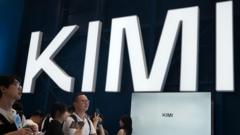
A prominent former technology advisor to the Trump administration has levelled serious accusations against a Chinese artificial intelligence powerhouse, claiming it stole proprietary code from American AI developer Anthropic. The allegations, initially reported by BBC Business, threaten to further inflame an already tense geopolitical technology landscape, as Western nations scrutinise Beijing's rapid advancements in AI.
Ross Kennedy, who served as Director of Technology Policy for the National Security Council under former US President Donald Trump, made the explosive claims publicly. While specific details of the alleged theft remain under wraps, Kennedy's remarks underscore a growing perception among some US officials that China's tech ascendancy is, in part, fuelled by illicit means or unfair competition. The accusations come at a critical juncture, with the US government increasingly focused on curbing access to advanced AI chips and technologies for Chinese entities, citing national security concerns.
Beijing's AI Ambitions Under the Microscope
China's ambition to become a global leader in artificial intelligence is well documented, with significant state investment pouring into research and development. However, this aggressive push has been met with suspicion in Washington and other Western capitals, where concerns about intellectual property theft and the potential military applications of advanced AI are paramount. The allegations against the unnamed Chinese AI firm – which BBC Business noted is considered a national champion in its field – will undoubtedly intensify these anxieties.
Anthropic, a leading US AI startup, is known for its advanced large language models, including the Claude series, often seen as a direct rival to OpenAI's ChatGPT. The company has attracted significant investment, including a substantial commitment from Amazon, highlighting its strategic importance in the global AI race. Any credible claim of its intellectual property being compromised by a foreign competitor would represent a significant blow, not just to the company, but to broader US technological leadership.
Escalating Tech War and Economic Implications
The timing of these revelations is particularly sensitive. The US has, in recent years, imposed a series of escalating export controls targeting China's access to advanced semiconductors and AI-related hardware, aiming to slow Beijing's progress in critical technologies. These measures have significant economic ramifications, impacting trade flows worth potentially billions of Australian dollars and forcing companies on both sides to re-evaluate supply chains and research partnerships. The latest accusations could provide further impetus for even stricter controls and increased scrutiny on collaborative research efforts.
Australian businesses and government agencies, already navigating a complex geopolitical environment, will be watching these developments closely. Reliance on Chinese-manufactured technology, particularly in sensitive sectors, is a recurring policy debate in Canberra. Should these allegations gain traction, they could further influence procurement decisions and cybersecurity strategies across the continent, potentially accelerating a decoupling of tech ecosystems.
A Broader Pattern of Concern
Critics of China's technological practices often point to a pattern of alleged intellectual property theft spanning various sectors, from industrial manufacturing to advanced software. While Beijing consistently refutes such claims, insisting its innovation is homegrown, the US government has repeatedly highlighted these issues in trade negotiations and national security assessments. The current dispute over AI code suggests that this long-standing tension is now extending into the cutting-edge domain of generative artificial intelligence, a technology widely expected to reshape economies and societies globally.
The coming weeks will likely see sustained pressure on the Chinese AI firm to address the accusations, even as both the US and Chinese governments jostle for technological dominance. The outcome of this particular claim, and its substantiation, could significantly influence the trajectory of global AI development and the fraught relationship between the world's two largest economies.