
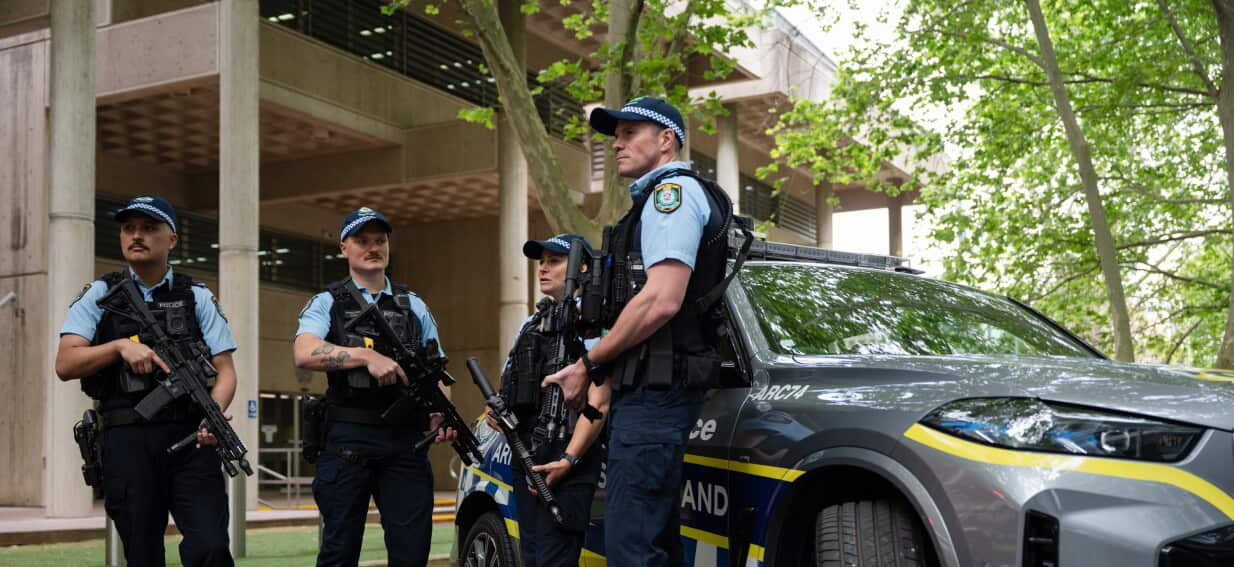
Civil liberties advocates have raised urgent human rights concerns following the deployment of a specialised New South Wales Police unit armed with military-style rifles, warning the move risks alienating communities across the state.
Specialised weaponry on Sydney streets
The launch of the Armed Response Command represents a significant tactical evolution for policing in New South Wales, placing high-calibre long arms into the hands of designated frontline response officers. Police leadership has framed the operational capability as a necessary safeguard designed to neutralise active armed offenders and mass casualty incidents with speed and lethal precision.
However, as SBS News reported, the visible introduction of military-style firearms has sparked intense debate over proportionality, with critics questioning whether such hardware belongs on suburban streets and public transport hubs. Detractors contend that placing assault-style weapons in public view fundamentally shifts the nature of civil policing in Australia.
Civil libertarians warn of creeping militarisation
Legal experts and human rights campaigners have warned that normalising the presence of militarised officers damages the fragile social contract between law enforcement and the public. SBS News reported that one vocal critic characterised the newly established arm of the force as an "intimidation unit", designed more to project state coercion than to foster community safety.
Advocacy bodies note that empirical research into police militarisation in overseas jurisdictions demonstrates that higher-calibre weaponry does not reliably reduce violent crime. Instead, civil liberties monitors caution that such displays often heighten public anxiety, exacerbate tensions in socio-economically disadvantaged suburbs, and increase the likelihood of fatal outcomes during welfare checks and acute mental health crises.
Operational doctrine versus community cohesion
The New South Wales Police Force has consistently defended tactical upgrades, maintaining that contemporary security threats—ranging from lone-actor terrorism to complex siege situations—demand immediate, heavily armed first responders. Under conventional operational protocols, standard-issue sidearm-equipped officers frequently had to establish cordons and await tactical specialists, losing critical minutes.
Yet community leaders express apprehension about where the unit will routinely operate. Concerns remain acute across Western Sydney and regional centres, where historical policing practices have faced sustained community scrutiny. The fear among advocates is that routine high-visibility patrols by officers wielding semi-automatic rifles will disproportionately target minority populations, fostering an atmosphere of siege rather than reassurance.
Demands for stringent oversight and transparency
As the Armed Response Command commences operations, calls are mounting for clear public thresholds governing the unit's deployment. Transparency advocates argue that standard operating procedures, rules of engagement, and protocols for brandishing long arms must be made accessible to the public rather than concealed behind operational secrecy.
Without independent oversight and regular reviews of tactical encounters, watchdogs warn that the ongoing escalation of police arsenals risks irrevocably eroding Australia's traditional community-policing model.