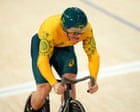
Australian cycling fans and officials alike are reeling after Olympic medallist Matt Richardson, following his high-profile defection to Great Britain, launched a stinging critique of his former national team, likening it to a 'high school' compared to his new 'Hogwarts'-esque setup.
The swift track star, who secured three Olympic medals for Australia before opting to represent his birth country, England, has ignited a transcontinental sporting spat with his unreserved assessment. His move, which saw him switch allegiances despite winning two Commonwealth Games titles for Australia in Birmingham, has been a contentious topic, but Richardson claims the public backlash has had “zero effect” on him, vowing to use any lingering animosity as “fuel” for further success.
'High School' vs 'Hogwarts': A Stark Contrast
Richardson’s bold comparison, as reported by Guardian Australia Sport, has undoubtedly ruffled feathers within Cycling Australia. The sprinter articulated a profound disparity in resources and support between the two nations' programs, suggesting that his new English team offers a significantly superior environment for elite performance. While specific details of these perceived deficiencies in the Australian system remain largely unarticulated by Richardson, his vivid metaphor paints a picture of a well-resourced, almost magical, training ground in Britain versus a more rudimentary, perhaps underfunded, setup back home.
The implications of such a direct comparison from a decorated athlete are significant. It raises questions about the allocation of funding, coaching expertise, and sports science support within Australia's high-performance cycling pathways. With the Paris Olympics on the horizon, these comments could prompt an internal review of Cycling Australia's operations, particularly given Richardson’s proven ability to perform at the highest level.
Olympic Hero to Public Enemy?
Richardson’s journey from Australian Olympic hero to, as some might perceive, public enemy number one has been swift. His decision to switch allegiances, while permissible under international sporting regulations, is rarely met with enthusiasm by the jilted nation. For an athlete who once proudly wore the green and gold, winning three Olympic medals and two Commonwealth Games golds for Australia, his departure signifies a considerable loss of talent and experience from the national squad.
His nonchalant dismissal of any potential lingering animosity, coupled with his declaration of using it as “fuel,” demonstrates a determined focus on his athletic ambitions. This unwavering resolve suggests Richardson is unlikely to be swayed by public opinion in Australia, prioritising his career and performance above all else. The question now remains how Australian fans will react when he inevitably competes against his former teammates on the international stage.
Resources and the Road Ahead
At the heart of Richardson’s decision appears to be the pursuit of optimal resources and a training environment he believes will maximise his potential. Guardian Australia Sport highlighted his assertion of having “much better resources” with his new national team. This claim points to a broader challenge for Australian sport federations in a highly competitive global landscape, where nations are constantly vying to attract and retain top talent by offering state-of-the-art facilities, innovative coaching, and comprehensive support systems. The financial implications of such a disparity in resources could be substantial, with countries like England, and indeed Great Britain as a whole, often having access to larger budgets for elite sports programs.
As the cycling world looks towards upcoming international competitions, the spotlight will undoubtedly be on Matt Richardson. His performances in English colours will be scrutinised not just for his athletic prowess, but also for what they might say about the divergent paths of two prominent cycling nations. The 'Hogwarts' versus 'high school' debate, though anecdotal, has certainly injected an unexpected and somewhat acrimonious dynamic into the world of international track cycling.