
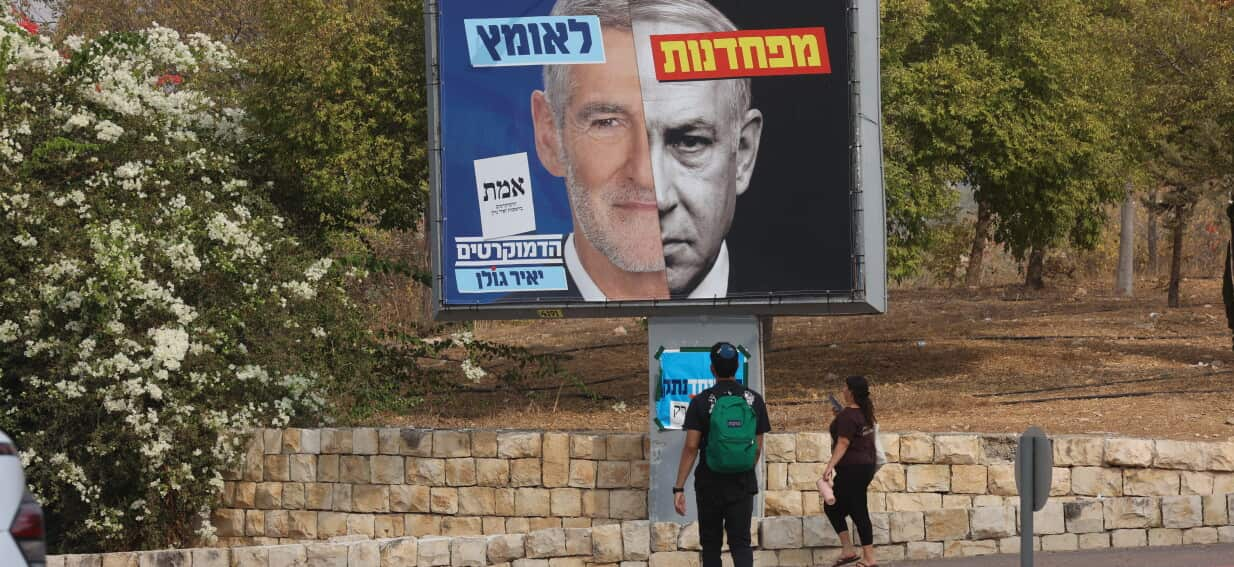
As Israel approaches an election widely cast as a referendum on Benjamin Netanyahu, survivors of the October 7 attacks remain deeply polarised over whether the long-serving Prime Minister should retain power.
A community fractured by grief and security failures
In the southern border communities that bore the brunt of the Hamas incursions, political sentiment is fraught with raw emotion. Many residents who survived the assaults across the border kibbutzim and towns place the ultimate responsibility for the catastrophic intelligence and military breakdown directly on Mr Netanyahu. SBS World reported that a significant cohort of survivors believe genuine national healing and institutional accountability remain impossible while the veteran leader continues to occupy the Prime Minister's office.
For these citizens, the political reckoning cannot arrive swiftly enough. They argue that the systemic failure to protect civilian lives shattered the foundational covenant between the state and its people. In their view, that breach can only begin to be repaired by a sweeping change at the highest level of government.
The argument for continuity in a prolonged war
Yet the political landscape in southern Israel is far from uniform. Despite the profound devastation inflicted on 7 October, another faction of survivors insists that unseating Mr Netanyahu in the midst of a multi-front conflict would actively imperil national security.
Supporters of the Prime Minister, alongside conservative voters across the country, maintain that wartime stability must supersede domestic political grievances. SBS World reported that among those who endured the onslaught, some view Mr Netanyahu as uniquely qualified to steer Israel through protracted military campaigns in Gaza and along the northern border. For this constituency, removing an experienced wartime leader during an existential crisis risks projecting dangerous vulnerability to regional adversaries.
An electoral reckoning for the veteran leader
Regardless of individual allegiances, the impending ballot is shaping up to be one of the most consequential in modern Israeli history, crystallising a domestic divide that pre-dated the war but was accelerated by it. Pre-war protests over contentious judicial reforms had already fractured civil society; the events of October 7 transformed those tensions into an urgent debate over basic governance and public trust.
Mr Netanyahu has consistently resisted calls to accept direct personal culpability for the security lapses, maintaining that formal inquiries should occur only after major hostilities cease. His political rivals, however, contend that this posture prioritises political survival over national interest.
Polarisation deepens across devastated border kibbutzim
With thousands of displaced residents still living in temporary accommodation, the election campaign is unfolding against an ongoing backdrop of mourning and displacement. Evacuees from devastated localities such as Be'eri and Kfar Aza remain divided not only on how their communities should be rebuilt, but on who possesses the moral authority to oversee the recovery.
As the campaign gathers pace, the divergent viewpoints among those who survived the nation's darkest day illustrate the extent to which the crisis has cut into the national psyche. Far from uniting the populace around a singular political path forward, the trauma of October 7 has entrenched competing visions for the country's future, ensuring the ballot box will deliver a definitive verdict on the Netanyahu era.
