
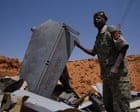
A horrific drone attack near a bustling transport hub in central Sudan on Sunday evening has claimed the lives of at least 80 people, predominantly commuters making their way home, according to eyewitness accounts. The tragedy, which occurred in the town of al-Dibab in West Kordofan state, underscores the escalating human cost of the protracted conflict gripping the nation.
The strike, described by witnesses as a double impact near a vibrant market, is being reported by Reuters World as one of the deadliest single incidents since fighting erupted between the Sudanese Armed Forces (SAF) and the Rapid Support Forces (RSF) last April. The sheer scale of casualties has sent shockwaves through the region, adding to the immense suffering already endured by Sudanese civilians.
Witness Recounts Harrowing Scene
Ahmed Wadi, a resident of al-Dibab, painted a grim picture of the immediate aftermath. “There were 50 bodies who I helped bury,” Wadi told Reuters World, his voice heavy with grief. “One of them was my own brother Mohamed.” His testimony highlights the deeply personal and widespread devastation inflicted by the indiscriminate nature of the warfare. Local reports suggest many victims were waiting for or boarding public transport, caught unawares in an area usually bustling with activity at the end of the day.
The al-Dibab attack comes amid intensified fighting across various fronts, with both the SAF, led by General Abdel Fattah al-Burhan, and the RSF, under General Mohamed Hamdan Dagalo, vying for control. While Reuters World did not attribute responsibility for this specific strike, both factions have been accused by international human rights organisations of conducting indiscriminate attacks that have resulted in significant civilian casualties. The use of drone technology, often supplied by foreign actors, has become a hallmark of the conflict, making urban areas increasingly perilous.
Escalating Humanitarian Catastrophe
The brutal violence, now stretching for over a year, has plunged Sudan into one of the world's worst humanitarian crises. The United Nations estimates that more than 16,000 people have been killed, with millions displaced internally and across borders. Food insecurity is rampant, with over 18 million people facing acute hunger, and medical facilities are overwhelmed or destroyed. The international community, including Australia, has repeatedly called for an immediate cessation of hostilities and unhindered humanitarian access.
Australian Foreign Minister Penny Wong, in previous statements, has expressed profound concern over the deteriorating situation in Sudan, urging all parties to respect international humanitarian law and protect civilians. While there has been no immediate direct comment from Canberra on this specific incident, the ongoing violence continues to be a point of deep concern for Australian diplomatic efforts focused on peace and stability in the region.
A Nation on the Brink
The conflict has shattered Sudan's fragile transition to democracy, which began after the overthrow of long-time dictator Omar al-Bashir in 2019. The two military factions, once allies in the coup that derailed civilian rule in 2021, turned on each other in a power struggle that has decimated the country’s infrastructure and economy. The nation's capital, Khartoum, has been particularly hard-hit, with widespread looting, destruction, and a complete breakdown of services.
This latest atrocity in al-Dibab serves as a stark reminder of the urgent need for a diplomatic solution. Without a sustained ceasefire and a credible path towards peace, aid agencies warn that the humanitarian situation will only worsen, pushing Sudan further into an abyss from which recovery will be incredibly challenging and costly in both human lives and financial terms, potentially costing billions of Australian dollars in future reconstruction and aid efforts.