
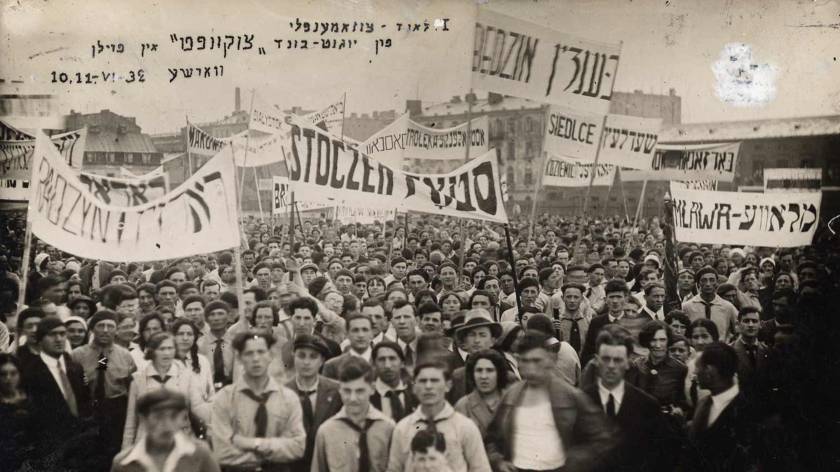
A forgotten socialist movement that rejected Zionism in favour of secular diaspora solidarity is finding renewed resonance as modern debates fracture traditional Jewish political orthodoxy, according to an analysis published by Crikey.
Chronicled in Molly Crabapple's new illustrated history, Here Where We Live Is Our Country, the General Jewish Labour Bund once commanded vast influence across Eastern Europe. As Crikey reported, the movement’s central philosophy offered a radical alternative to both religious assimilation and ethno-nationalism, arguing that Jewish civil rights had to be fought for wherever communities lived rather than through territorial migration.
The philosophy of 'hereness' in the Pale of Settlement
Founded in Vilna in 1897—the same year Theodor Herzl convened the First Zionist Congress in Basel—the Bund emerged within the Tsarist Russian Empire's Pale of Settlement. It championed doikayt, a Yiddish concept translating roughly to "hereness", which asserted that Jews belonged in the countries of their birth and ought to organise alongside local working-class allies.
While early political Zionists argued that antisemitism was an intractable condition of European life that could only be escaped through the establishment of a sovereign state in Palestine, the Bundists took an opposing stance. They argued that fleeing persecution conceded defeat to reactionaries and abandoned the broader democratic transformation of Europe.
Battling fascism on the streets of Eastern Europe
The Bund grew into a formidable political force during the interwar years, particularly in Poland. It commanded its own trade unions, secular Yiddish schools, cultural associations, and paramilitary self-defence units designed to protect Jewish neighbourhoods from pogroms and rising fascist violence.
Crikey noted that the movement’s resistance continued even into the darkest chapters of the 20th century. Bundists were central organisers in the Warsaw Ghetto Uprising of 1943, fighting alongside other socialist and communist partisans against Nazi forces, long before the post-war era solidified state-led Zionism as the dominant political framework of the global Jewish mainstream.
Diaspora debates reignite amid contemporary conflict
The historical trajectory of Bundism was largely severed by the Holocaust, which wiped out the Yiddish-speaking working classes of Poland, Lithuania, and Ukraine. In the aftermath of World War II, the establishment of the State of Israel in 1948 and the assimilation of survivors into Western nations left the movement largely sidelined in institutional communal life.
Yet, as Crikey observed, the ideological divisions that defined the early 20th century have resurfaced with unexpected force. Amid escalating conflict in the Middle East and mounting domestic political friction, younger cohorts of Jewish activists in Australia, Britain, and the United States are increasingly questioning whether unconditional support for Israeli state policy should dictate their communal identity.
An enduring legacy on Australia’s cultural fringe
Australia itself became a significant haven for surviving Bundists after 1945, particularly in Melbourne, where a dedicated community of post-war refugees maintained secular Yiddish cultural institutions, youth camps, and educational centres for decades.
While contemporary communal leadership across Sydney and Melbourne remains predominantly aligned with mainstream Zionist organisations, Crabapple's account underscores how historical alternatives continue to provide an intellectual blueprint for dissent. For many progressive diaspora voices navigating bitter modern debates, the Bund's century-old insistence on civic belonging over territorial nationalism remains a compelling, if contentious, political reference point.


