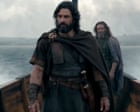
Tech billionaire Elon Musk has released an artificial intelligence-generated adaptation of Homer’s Odyssey, mounting a widely ridiculed artistic riposte to filmmaker Christopher Nolan’s critically acclaimed and commercially dominant cinema blockbuster.
The seven-minute instalment, produced via Musk’s xAI venture using the Grok platform, represents the tech tycoon's long-promised answer to Nolan’s cinematic retelling of the Trojan epic. Yet far from demonstrating algorithmic superiority, the digital rendering has arrived to widespread critical indifference and sharp derision.
Feud ignited over blockbuster casting
The unusual project stems from an online confrontation sparked months ago, when Musk publicly criticised Nolan’s casting choices prior to the theatrical premiere. The billionaire took aim at what he characterised as contemporary cultural concessions, singling out the inclusion of Elliot Page as Sinon and Academy Award winner Lupita Nyong'o as Helen of Troy.
While Nolan’s production went on to generate stratospheric global receipts and widespread critical plaudits, Musk refused to concede ground. He petulantly claimed on his social media platform that his proprietary artificial intelligence models could construct a more faithful, historically authentic interpretation of Homer’s classical text.
Seven minutes of digital mythology
The resulting production attempts to diverge immediately from Nolan’s narrative architecture. Musk’s initial episode focuses on a mythological prologue absent from the silver screen version.
The narrative opens with Odysseus feigning madness in an effort to evade conscription into the Trojan War. Greek leaders Palamedes and Agamemnon resolve to test his alleged insanity by placing his infant son, Telemachus, directly in the path of a working plough. Odysseus reflexively rushes forward to rescue his child, betraying his sound mind and forcing his accession to the military armada.
After Odysseus bids farewell to his wife Penelope and young son, an intertitle advances the chronology by a decade, arriving at the shores of Troy just as the legendary wooden horse deception is orchestrated.
Screensaver aesthetics and synthetic drama
Guardian Australia Culture reported that the digital sequence proved largely lifeless, likening the visual presentation to a glorified laptop screensaver rather than a serious artistic riposte. The review noted that the production arrived well after the original cultural debate had dissipated, rendering the spectacle an exercise in vanity rather than creative triumph.
Rather than capturing the grit and gravitas of Homeric verse, critics observed that the AI-driven imagery struggled to convey human emotion, producing stiff character models and unconvincing expressions.
Algorithmic ambition meets narrative limits
The release highlights the escalating friction between Silicon Valley’s creative ambitions and traditional cinematic craft. Tech leaders have repeatedly argued that generative video tools will soon democratise big-budget filmmaking, bypassing conventional studios entirely.
However, the Grok experiment demonstrates the profound chasm remaining between automated visual generation and narrative nuance. While Nolan’s production balanced classical themes with sweeping cinematography and live performance, Musk’s synthetic epic serves primarily as an illustration of generative video's current storytelling limitations.