
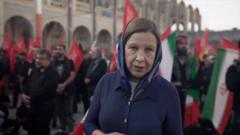
TEHRAN – In a city often veiled by geopolitical tensions, a different spectacle unfolded this week as Tehran prepared for the funeral of its former Supreme Leader, Ayatollah Ali Khamenei. Lyse Doucet, the BBC’s chief international correspondent, offered a vivid and nuanced account of the events, capturing the intricate interplay of genuine mourning, orchestrated solidarity, and the enduring political currents that define the Islamic Republic.
Doucet’s dispatches painted a compelling picture of a nation in transition, grappling with the legacy of a leader who shaped its destiny for decades. The streets of Tehran, typically bustling with everyday life, were transformed into a canvas of black and white, adorned with banners bearing Khamenei's image and poignant messages of remembrance. While official narratives emphasised national unity and profound sorrow, the BBC World report subtly highlighted the undercurrents of a society where devotion and political pragmatism often intertwine.
A Sea of Black: Public Displays of Grief
The sheer scale of public participation was undeniable. Doucet described vast crowds, clad predominantly in black, converging on key locations across the capital. These were not mere gatherings; they were elaborate processions, punctuated by emotional rituals and fervent displays of allegiance. The atmosphere, as reported by BBC World, was charged with a palpable sense of occasion, a blend of religious observance and national commemoration. Many attendees, tears streaming, held aloft portraits of the late leader, their voices joining in chants that echoed through the city’s ancient alleys and modern boulevards.
While state media showcased wall-to-wall coverage of the funeral events, presenting an image of a unified and grief-stricken populace, Doucet's observations offered a richer texture. She noted the diverse demographics within the throngs – from elderly women draped in chadors to young men with an air of solemn duty, all seemingly compelled by a confluence of faith, tradition, and civic expectation. The state's pervasive influence on public expression in Iran is well-documented, and these events, while undoubtedly drawing on genuine sentiment, also served as a powerful demonstration of organised national mourning.
Beyond the Mourning: The Political Subtext
The funeral, however, was more than just a farewell; it was a potent political statement. In a nation where the lines between spiritual leadership and state governance are inextricably blurred, the passing of a Supreme Leader triggers a complex succession process and a period of intense reflection on the country's future direction. Doucet's reporting underscored this latent political energy, noting how the event provided a platform for current leaders to reaffirm their commitment to Khamenei's revolutionary ideals and to project an image of stability and continuity.
The presence of high-ranking Iranian officials, religious dignitaries, and military commanders alongside the throngs of mourners served as a powerful visual testament to the enduring power structure. The BBC World correspondent's narrative hinted at the quiet jockeying for influence that often accompanies such transitions, even amidst public displays of unity. For observers both within and outside Iran, the funeral offered crucial insights into the internal dynamics of the Iranian leadership and the direction they intend to steer the nation in the coming years.
Echoes of History: A Nation’s Evolving Identity
Reporting from the heart of Tehran, Doucet also touched upon the historical resonance of the moment. The funeral of a Supreme Leader inevitably harks back to previous chapters in Iran's modern history, particularly the seismic events of the 1979 revolution and the passing of its architect, Ayatollah Ruhollah Khomeini. The current funeral, while distinct in its context, carries echoes of those earlier periods, showcasing a nation deeply rooted in its revolutionary narrative yet continually evolving.
The atmosphere conveyed by BBC World was one where deep-seated traditions met the challenges of contemporary geopolitics. The cost of such an extensive state funeral, while not explicitly detailed, would undoubtedly amount to millions of Australian dollars, reflecting the significance accorded to the departed leader. As the ceremonies conclude, and the grieving period slowly gives way to the everyday rhythm of life, the questions of succession, policy direction, and Iran’s place on the global stage will undoubtedly intensify, leaving Lyse Doucet’s observations as a vital record of a nation in a moment of profound transition.