
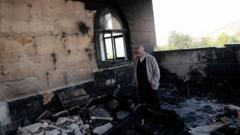
Israeli settlers have reportedly unleashed a series of destructive attacks across the occupied West Bank, torching mosques, vehicles, and vast swathes of agricultural land, according to Palestinian authorities. These latest acts of aggression follow a deadly clash just two days prior, which claimed the lives of four Palestinians and two Israelis, further inflaming an already volatile political landscape.
The widespread arsons have been condemned internationally, with calls for restraint and immediate investigation. The incidents underscore the deeply entrenched conflict in the region, where land disputes, religious sites, and resource control frequently ignite into open hostilities.
Retaliation After Deadly Clash
The reported settler attacks appear to be a violent reprisal for a confrontation that occurred near the Palestinian village of Tell. Details surrounding the initial clash remain contested, but it resulted in significant casualties on both sides, intensifying an already fraught atmosphere. Palestinian eyewitnesses described groups of settlers, some armed, entering villages and agricultural areas, setting fires indiscriminately.
Local Palestinian councils have documented extensive damage, including several mosques partially destroyed by fire, dozens of private vehicles gutted, and hundreds of olive trees — a critical source of income for many Palestinian families — burned to the ground. The economic impact on already struggling communities is expected to be severe, with recovery efforts likely to cost millions of Australian dollars.
Widespread Destruction and Fear
Reports compiled by Palestinian human rights organisations detail incidents across multiple West Bank locations, including Nablus, Salfit, and Ramallah governorates. In one particularly egregious incident, the exterior of a mosque in the village of Burqa was badly damaged by fire, while several cars in the nearby village of Huwara were completely incinerated. Such acts are not merely about property destruction; they are perceived by Palestinians as attempts to intimidate and displace them from their ancestral lands.
The BBC World service reported on the escalating nature of these attacks, highlighting the growing frustration and fear among Palestinian residents. Many fear that the Israeli military and police are not doing enough to protect them or to prosecute those responsible for the settler violence. Conversely, some Israeli settler groups claim they are acting in self-defence against perceived Palestinian aggression.
International Calls for De-escalation
The Australian government, alongside other international bodies, has expressed deep concern over the escalating violence. A spokesperson for Australia's Department of Foreign Affairs and Trade (DFAT) urged all parties to exercise restraint and de-escalate tensions. They reiterated Australia's long-standing position on the Israeli-Palestinian conflict, advocating for a two-state solution and condemning acts of violence from all sides.
Humanitarian organisations operating in the region are bracing for increased needs, as damaged infrastructure and agricultural losses will undoubtedly exacerbate existing hardships. The cycle of violence poses a significant challenge to any prospects of a peaceful resolution, with each retaliatory act pushing the two communities further apart. The international community is under pressure to intervene more decisively to prevent further bloodshed and to hold perpetrators accountable.