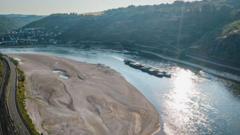
Europe's most crucial rivers, the Rhine, Danube, and Po, are experiencing historic low water levels, triggering a domino effect across the continent's logistics networks and energy supply. This environmental crisis, detailed in reports from BBC World, is severely impacting the transport of essential goods and reducing electricity output, sending ripples through international markets, including Australia.
The Rhine, a waterway fundamental to European trade, has seen its water levels plummet to record lows. This has drastically curtailed the capacity of cargo barges, which are now forced to carry significantly lighter loads or halt operations altogether. The inability to move goods efficiently along this critical artery means delays and increased costs for everything from coal and oil to chemicals and grain, affecting industries reliant on these imports and exports.
Australia Braces for Supply Chain Shockwaves
The crisis on European rivers is not merely a regional issue; its global ramifications are beginning to emerge. Australian businesses and consumers could face higher prices and longer waiting times for a range of imported goods. While direct shipments to Australia are typically via sea, the disruption to European manufacturing and internal distribution inevitably translates into delays and increased logistical costs within the global supply chain. For example, components manufactured in Germany might face delays reaching export ports, ultimately impacting Australian industries that use these parts. Economists are warning that this disruption could exacerbate existing inflationary pressures, already a concern for the Reserve Bank of Australia.
Furthermore, the energy implications are particularly troubling. Many European power plants, including nuclear and coal-fired facilities, rely on river water for cooling. Low water levels mean these plants must reduce output or shut down entirely to avoid overheating, further straining an already precarious energy market. As Europe scrambles to secure energy supplies, global demand for alternatives could drive up prices for fuels like LNG, impacting Australia's export markets and potentially domestic energy costs.
Unprecedented Drought Conditions
The severity of the drought across Europe is unprecedented in recent history, attributed to prolonged periods of low rainfall and higher-than-average temperatures. The situation is so dire that sections of the Po River in Italy, normally a bustling agricultural and industrial conduit, have dried up completely in parts, exposing historical artefacts previously submerged. Similarly, navigation on the Danube, a vital link for Eastern Europe, is becoming increasingly treacherous, with vessels struggling to pass shallow stretches.
Scientists and environmental agencies are highlighting the compounding effects of climate change, suggesting that such extreme weather events may become more frequent. The immediate challenge is adapting to the current crisis, but the long-term implications necessitate a re-evaluation of Europe's infrastructure resilience and energy strategies.
Economic Fallout and Future Outlook
The economic fallout is substantial. Companies that rely on river transport are already reporting significant financial losses due to reduced capacity and increased operational costs. Some are resorting to more expensive and less environmentally friendly alternatives like road and rail transport, adding further strain to infrastructure and contributing to higher carbon emissions. Analysts are revising down economic growth forecasts for several European nations, citing the combined impact of energy shortages and logistical bottlenecks.
For Australia, while the immediate impact might seem distant, the interconnectedness of global trade means that a significant disruption in a major economic bloc like Europe will inevitably be felt. Australian importers are advised to review their supply chain contingencies, while consumers may need to prepare for potential price increases or reduced availability of certain goods. The ongoing crisis serves as a stark reminder of the global vulnerability to climate change and its far-reaching economic consequences.