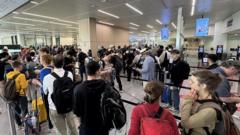
Australians dreaming of a European summer getaway could face significant hurdles and lengthy delays at the continent's borders, as a new Entry-Exit System (EES) threatens to throw airports into chaos. The head of Berlin Brandenburg Airport has issued a stark warning, declaring that potential waiting times under the new regime will be "not bearable" during peak holiday months.
The EES, set to be rolled out across the Schengen Area – which includes most EU member states and a few non-EU countries like Switzerland and Norway – aims to digitalise and streamline border checks for non-EU citizens. However, rather than speeding things up, critics fear it will create massive bottlenecks at major transport hubs, especially in the busy summer period when millions flock to Europe from countries including Australia.
Digital Dreams, Real-World Headaches
The new EES system will require non-EU travellers, including Australians, to register biometric data – fingerprints and a facial scan – upon their first entry into the Schengen Area. This information will then be stored for three years. While the intention is to automate border control and better track overstayers, early simulations and trials have suggested the process is time-consuming, leading to concerns about its practical implementation at scale.
Historically, non-EU visitors relied on passport stamps to track their 90-day visa-free stay within a 180-day period. The EES will replace this, logging entries and exits digitally. According to BBC Business, the CEO of Berlin Brandenburg Airport, Aletta von Massenbach, expressed deep concern, stating that without significant infrastructure upgrades and adequate staffing, the system would lead to "unbearable" delays. She specifically highlighted the manual checks required for first-time EES users as a major pain point.
Australian Tourists in the Crosshairs
For Australian travellers, planning a multi-country European itinerary is a rite of passage. However, the EES could turn seamless border crossings into frustrating ordeals. Imagine landing in Rome for the start of your journey, only to spend hours in queues for biometric registration before you even reach baggage claim. Then, upon leaving, similar delays could jeopardise onward connections.
Travel industry experts in Australia are monitoring the situation closely. While specific advice is still developing, it’s anticipated that airlines will begin issuing strong pre-travel warnings. The Department of Foreign Affairs and Trade (DFAT) could also update its Smartraveller advice, urging Australians to factor in considerable extra time for border procedures and potentially recommending arriving at airports much earlier than usual for departures from the Schengen Area. This could mean budgeting an extra few hundred dollars for flexible flights or travel insurance to cover missed connections.
Infrastructure Under Pressure
The core of the problem lies in the readiness of individual airports and ports within the 27 Schengen countries. Many border control points were not designed with biometric scanning and digital registration in mind. Upgrades are costly and time-consuming. While some larger airports may be better equipped, smaller, yet popular, entry points could be particularly vulnerable to congestion. BBC Business reported that many European transport hubs are struggling to install the necessary equipment and train staff in time for the system's projected launch, which has already seen several delays.
This impending bottleneck has prompted calls for greater investment in automated gates and increased staffing to manage the influx of travellers. Without these critical adjustments, the dream European summer holiday for countless Australians could quickly descend into a queue-filled nightmare at the continent's borders. Prospective travellers are advised to stay informed about the EES rollout and plan their itineraries with ample buffer time to avoid potential disappointment.