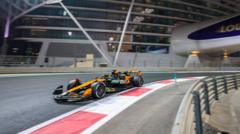
The high-octane world of Formula 1 is preparing for potential turbulence off-track, as the sport's governing body maps out contingency plans for its 2026 season finale. Stefano Domenicali, the president and CEO of Formula 1 Group, has indicated that the championship could conclude in Europe if ongoing conflict in the Middle East renders the scheduled races in Qatar and Abu Dhabi untenable.
His comments, initially reported by BBC Sport, underscore the growing concern within international sports organisations regarding the impact of regional instability on global event calendars. While no immediate changes are foreseen for the upcoming seasons, the long-term planning for 2026 is clearly factoring in geopolitical risks that could affect lucrative contracts and the sport's global footprint.
Geopolitical Shifts Impacting Global Sport
Domenicali's proactive statement reflects a broader trend of major sporting bodies grappling with regional conflicts. The Middle East has become an increasingly significant hub for Formula 1 in recent decades, with substantial investment from nations like Qatar, Saudi Arabia, Bahrain, and the United Arab Emirates. These partnerships have seen new, state-of-the-art circuits emerge, often hosting double-header races or season finales, solidifying the region's status as a key market for the sport.
However, the current geopolitical climate, particularly the conflict involving Israel and Hamas, has prompted a re-evaluation of long-term commitments. While the region currently hosts four Grand Prix events, Formula 1 is keen to project an image of stability and certainty for its teams, sponsors, and global audience. The potential for disruption, either through direct security concerns or broader travel advisories, necessitates serious consideration of alternative venues.
European Circuits Poised for Stand-in Role
Should the Middle Eastern component of the 2026 calendar prove unfeasible, a return to Europe for the season's climax would mark a significant, albeit temporary, shift. Europe remains the traditional heartland of Formula 1, boasting numerous iconic circuits with the infrastructure and experience to host Grand Prix events at short notice. Venues such as the Circuit de Spa-Francorchamps in Belgium, Monza in Italy, or even the Hungaroring in Hungary could be considered as potential stand-ins.
Such a move would likely be welcomed by European fans, but it would also present logistical challenges. The scheduling of a season finale often involves specific climatic considerations and travel arrangements that are carefully planned years in advance. A late switch would undoubtedly incur additional costs and require swift coordination from all stakeholders within the sport. Financial implications for venue contracts and sponsorship agreements would also need meticulous renegotiation.
Navigating Commercial and Ethical Considerations
The discussion around contingency plans also touches upon the complex interplay of commercial interests and ethical responsibilities. Formula 1's expansion into the Middle East has been driven by substantial financial agreements, with host nations often contributing hundreds of millions of Australian dollars annually for the privilege of hosting a Grand Prix. Any forced withdrawal from these venues, even temporary, would have considerable financial ramifications for the sport.
Furthermore, the sport continually navigates criticisms regarding its presence in countries with contentious human rights records. While Formula 1 maintains its stance of being a force for positive change through engagement, widespread regional conflict only intensifies the scrutiny. Domenicali's comments suggest an awareness of these multifaceted pressures, aiming to balance the commercial imperatives with the practical realities of a turbulent world stage.
Ultimately, while the hope remains that the 2026 championship will proceed as planned, the open acknowledgement of alternative scenarios by Formula 1’s top brass highlights a proactive approach to potential global instability. The sport is signalling its readiness to adapt, ensuring that the spectacle of the Formula 1 season finale can continue, regardless of the challenges that lie ahead.