
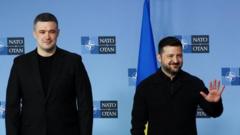
Kyiv: Ukraine’s political landscape is abuzz with reports of a significant rift at the highest levels of government, as ousted Defence Minister Mykhailo Fedorov is said to be steadfastly refusing alternative roles offered by President Volodymyr Zelensky. The veteran politician's defiance, as reported by BBC World, underscores a battle of wills that could have profound implications for Ukraine's war effort against Russia.
Fedorov, whose abrupt dismissal late last month sent ripples through international diplomatic circles, is reportedly insisting on his full reinstatement as Defence Minister. This firm stance puts him directly at odds with President Zelensky, who is understood to be keen to move the former minister into a different, albeit still significant, government position. The unfolding drama comes at a critical juncture for Ukraine, with territorial gains proving difficult and the ongoing need for cohesive leadership paramount.
A Battle for Control and Influence
The impasse between Fedorov and Zelensky is more than just a personnel dispute; it speaks to deeper dynamics within the Ukrainian administration. Fedorov has been a key figure in the nation's defence posture since the full-scale invasion began, earning both praise and scrutiny for his leadership. His departure was officially cited as part of a broader government reshuffle aimed at improving wartime efficiency and combating corruption perceptions. However, the BBC World report suggests that Fedorov views his removal as unjust and is leveraging his considerable political capital to challenge the President's decision.
The specific alternative posts offered to Fedorov have not been publicly disclosed, but sources close to the administration suggest they were designed to maintain his expertise within the government without returning him to the sensitive defence portfolio. His rejection, however, signals a desire not just for a role, but for that specific role, implying a belief that he is indispensable to the nation's security architecture as Defence Minister.
Unsettling Allies, Fueling Kremlin Narratives
For Australia and its Western allies, who have collectively funnelled billions of Australian dollars in aid and military assistance to Kyiv, such public displays of discord are a cause for concern. Stability and unity within Ukraine's leadership are crucial for maintaining international confidence and ensuring the effective deployment of aid. Any perceived instability could be exploited by Moscow to further its propaganda narratives about a disorganised and fracturing Ukrainian government.
Australia's own commitment to Ukraine's sovereignty remains unwavering, with over AUD 910 million in assistance provided to date, including armoured vehicles and critical humanitarian support. Observers in Canberra will be watching these developments closely, understanding that political cohesion in Kyiv is as vital as battlefield successes. The last thing Kyiv needs is internal squabbles distracting from the immediate threat posed by Russian aggression.
The Road Ahead for Kyiv's Leadership
The immediate future of this political standoff remains uncertain. President Zelensky, known for his decisive leadership during the war, now faces a delicate balancing act. Forcing Fedorov out entirely could create a disgruntled and potentially vocal opponent, while capitulating to his demand for reinstatement might be perceived as a weakening of presidential authority. A compromise, perhaps involving a modified defence role or a return with specific conditions, could be sought, though neither side appears willing to yield at this stage.
This high-stakes game of political chess unfolds against a backdrop of intense military operations and ongoing Western support. The ultimate resolution of the Fedorov-Zelensky dispute will not only shape the future of Ukraine's defence portfolio but also send a powerful message about the robustness and unity of its wartime government.