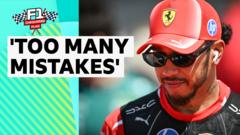
Budapest, Hungary — Ferrari’s F1 title campaign hit yet another speed bump in Budapest, with glaring strategic errors at the Hungarian Grand Prix squandering what many believed was their strongest chance for victory. Despite showcasing blistering pace in practice sessions, Charles Leclerc ultimately crossed the finish line a distant fourth, well behind Red Bull victor Max Verstappen, while Mercedes’ Lewis Hamilton capitalised on the Maranello squad's woes to claim an unexpected second.
Practice Pace to Race Day Pain
Ferrari arrived at the Hungaroring with a noticeable spring in their step. Both Charles Leclerc and Carlos Sainz consistently topped the timesheets during Friday and Saturday practice, leading many to tip them as the clear favourites for the weekend. The F1-75 appeared perfectly balanced for the twisty, technical circuit, giving fans and commentators alike reason to believe a dominant performance was on the cards. BBC Sport’s F1 team, among others, highlighted the Scuderia’s formidable potential after practice, suggesting they had the car to beat.
However, race day painted a starkly different picture. Despite converting pole position, courtesy of George Russell, into an early lead, Leclerc’s race unravelled spectacularly during the pit stops. A contentious decision by the Ferrari strategists to switch Leclerc onto the hard compound tyres in the crucial final stint proved disastrous. The harder rubber struggled to generate the necessary grip and temperature in the cooler conditions, causing Leclerc’s pace to plummet dramatically. He was quickly overtaken by Verstappen and subsequently by Russell, his championship rival’s main competitor.
Strategic Blunders and Tyre Troubles
Industry analysts and former drivers were quick to dissect Ferrari’s perplexing tyre call. The hard compound had already proven ineffective on other cars earlier in the race, making the decision to fit them to Leclerc’s car a baffling one. The pit wall’s gamble not only cost Leclerc a potential podium but also allowed Lewis Hamilton, who had started seventh, to surge through the field on a more aggressive tyre strategy, eventually securing a remarkable second place. Had Ferrari opted for the medium tyres, a strategy successfully employed by their rivals, Leclerc’s chances of maintaining a podium position, if not challenging for the win, would have been significantly higher. The incident has once again brought Ferrari's strategic decision-making under intense scrutiny, with some suggesting a cultural issue within the team for repeated miscalculations this season.
The Championship Chasm Widens
The Hungarian Grand Prix result has dealt a severe blow to Ferrari’s championship aspirations. Max Verstappen’s dominant victory extended his lead over Leclerc to a formidable 80 points, an increasingly daunting gap as the season progresses. The F1-75 clearly possesses the raw speed to challenge Red Bull, as evidenced by its performance in practice. Yet, the inability to convert this potential into consistent race day results, often due to operational and strategic missteps, is costing them dearly. With a significant financial investment in the sport, reportedly upwards of half a billion Australian dollars annually, the pressure on Ferrari to deliver titles is immense.
Looming Summer Break Reflection
As the sport heads into its traditional summer break, Ferrari faces an uncomfortable period of reflection. The team’s management will undoubtedly be dissecting every decision made at the Hungaroring, and throughout the season. While the car itself is undeniably competitive, the consistent errors in execution are undermining their formidable engineering efforts. For Australian F1 fans, who have long admired Ferrari's legendary status, the recurring narrative of 'what if' is becoming increasingly frustrating. The hope remains that the Maranello outfit can use the enforced hiatus to regroup, recalibrate their strategy, and return in the second half of the season with a renewed focus on delivering on their undeniable potential.