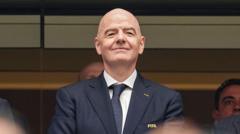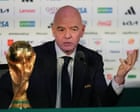
FIFA's controversial proposal to sell off stakes in the highly lucrative World Cup has ignited a fierce war of words with UEFA, the governing body for European football. UEFA has accused FIFA of attempting to “enrich themselves and their friends” through a private investment deal that comes with a tempting — and some say coercive — AUD$28 million (approximately $20 million US) payout offer to each of its 211 member associations.
Guardian Australia Sport reported that FIFA has set a looming deadline of September 19 for these associations to opt in for an initial payment. This financial incentive is tied directly to their support for the proposed sell-off, a move that has drawn widespread condemnation and raised serious questions about the future autonomy of global football's showpiece event.
'Support Our Plan or Miss Out'
UEFA's condemnation was swift and unsparing. In a strongly worded statement, European football’s governing body highlighted the timing and nature of the offer, stating, “Today we have learned of Fifa’s deadline to associations to support their proposals or have the one-off payout offer withdrawn. This says everything you need to know about this plan.” This all-or-nothing approach has fueled suspicions that FIFA is attempting to buy the allegiance of its member associations, particularly those from smaller, less financially robust nations, to push through a deal that lacks broader consensus.
A key element of FIFA's plan involves selling stakes in newly established entities that would control the commercial rights to various international club and national team competitions. The World Cup, as the crown jewel of international football, is central to this proposed restructuring, and the potential for privatising its commercial future has alarmed many within the sporting world.
Global Pushback Gathers Pace
The chorus of disapproval extends beyond Europe. Both the Football Association (FA), governing football in England, and CONCACAF, the confederation for North, Central American, and Caribbean Association Football, have joined UEFA in expressing strong reservations about the plan. Their collective opposition signals a significant challenge to FIFA's strategy, suggesting that the proposed sell-off is far from universally accepted despite the financial inducements being offered.
Critics argue that placing the commercial future of the World Cup into private hands could erode the sport's integrity and its accessibility. Concerns range from potential changes to tournament formats and scheduling, driven by profit motives rather than sporting development, to a loss of control over the event's iconic brand. There are also fears that such a deal could disproportionately benefit a select few investors and FIFA insiders, rather than genuinely serving the global football community.
The Price of Influence
For many smaller football associations worldwide, the prospect of an immediate AUD$28 million cash injection is undoubtedly tempting. Such a sum could be transformational, funding grassroots development, improving infrastructure, or bolstering local leagues. However, UEFA's stern warning implies that accepting this money could come at a significant long-term cost, potentially compromising the independence and future financial health of the sport itself.
The standoff between FIFA and its powerful critics highlights a fundamental disagreement over the governance and commercialisation of global football. As the September 19 deadline approaches, the pressure on member associations to make a choice – between immediate financial gain and what many view as the protection of football's core values – will intensify. The outcome of this high-stakes power play could redefine the landscape of international football for decades to come, shaping how its most valuable assets are managed and for whose benefit.