
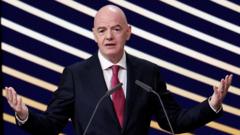
Football's global governing body, FIFA, recently floated a controversial plan to essentially part-privatise its most valuable asset – the FIFA World Cup. The audacious proposal, reportedly valued at a staggering A$37 billion (US$25 billion), has been met with a barrage of criticism and, as BBC Business trenchantly observed, 'raises many more questions than it answers.'
The secretive nature of the deal, which involved a consortium of undisclosed investors, immediately set alarm bells ringing. The lack of transparency surrounding the potential buyers and their motives has fuelled speculation and deepened mistrust among football federations and fans alike. Critics argue that such a pivotal shift in the ownership structure of the World Cup demands public scrutiny and extensive consultation, not backroom dealings.
The A$37 Billion Question Mark
At the heart of the controversy is the eye-watering A$37 billion offer for a stake in FIFA's flagship competitions, including the World Cup. While such a sum might appear enticing on paper, particularly for an organisation that has faced financial scrutiny in the past, experts are questioning the true value proposition. BBC Business highlighted the lack of clarity regarding precisely what assets would be acquired for this enormous sum. Would it be a share of future revenues, a slice of intellectual property, or a direct stake in the organisation and management of the tournaments themselves? Without these crucial details, the offer remains a speculative figure rather than a concrete investment.
Furthermore, analysts are scrutinising the long-term financial implications. Would FIFA be sacrificing future growth and independence for a short-term cash injection? The World Cup is a proven revenue generator, and ceding even partial control could significantly impact FIFA's ability to direct its own destiny and invest in football development globally. The risk of prioritising investor returns over the broader interests of the sport is a genuine concern.
Undermining Football's Integrity?
Beyond the financial mechanics, the proposed part-privatisation raises profound ethical questions about the integrity of football. The World Cup is more than just a sporting event; it's a cultural phenomenon, a source of national pride, and a symbol of global unity. Introducing private equity interests into its core operations could fundamentally alter its character. Concerns have been voiced that commercial imperatives might supersede sporting principles, potentially influencing tournament formats, host nation selections, and even broadcasting rights in ways that benefit investors over the game itself.
BBC Business noted the inherent conflict of interest that could arise if private entities gain significant influence over a tournament that traditionally operates under the aegis of a non-profit sporting body. The potential for a clash between commercial drivers and the developmental goals of football, particularly in emerging nations, is a significant hurdle for FIFA to address.
The Secrecy and Suddenness of the Bid
Perhaps one of the most perplexing aspects of FIFA's proposal was its sudden emergence and the veil of secrecy surrounding the prospective investors. The identities of the consortium members were not initially disclosed, sparking intense speculation and suspicion across the footballing world. Such a lack of transparency immediately eroded trust and fuelled accusations of opaque dealings, a perception FIFA has worked hard to shed in recent years. This sudden, unvetted offer from undisclosed parties immediately raised red flags for many football federations and stakeholders.
According to BBC Business, this clandestine approach stood in stark contrast to the open and consultative processes typically expected for decisions of such magnitude. The manner in which the proposal was presented suggested a degree of urgency and exclusivity that did not sit well with the principles of good governance and accountability expected from an organisation overseeing the world's most popular sport. The lack of prior consultation with member associations and confederations only added to the perception of a deal being pushed through without proper due diligence or consensus.