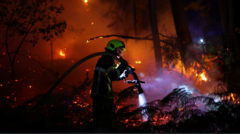
More than 340,000 residents and holidaymakers have been forced to evacuate their homes and campsites across southwestern France and parts of Spain as unprecedented wildfires, fanned by extreme heat and drought conditions, continue to scorch vast tracts of land. The infernos have been so intense that fire authorities in France have reported battling terrifying 'fire whirlwinds', adding a new, deadly dimension to the crisis.
The scale of the disaster has prompted grave concerns from Australian fire experts, who are closely monitoring the unfolding events as a precursor to our own bushfire season. The European conflagrations serve as a stark reminder of the escalating global challenge posed by climate change.
Bordeaux's Battle Against the Blaze
In France, the Gironde department, home to Bordeaux's renowned wine region, remains the epicentre of the devastation. While vineyards have largely been spared direct impact due to strategic firefighting and natural firebreaks, the widespread smoke and ash fallout are raising concerns for the upcoming harvest. Towns like La Teste-de-Buch and Landiras have seen homes engulfed and communities decimated, with firefighters describing scenes of utter desolation.
The evacuations, unprecedented in their scope for the region, have seen families flee with what little they can carry, seeking refuge in emergency shelters or with relatives further afield. Local authorities, stretched thin, are coordinating an enormous logistical effort to provide food, water, and medical assistance to the displaced.
The Terrifying Phenomenon of Fire Whirlwinds
BBC World reported that French firefighting efforts have been complicated by the emergence of 'fire whirlwinds' – a phenomenon more commonly associated with the ferocious bushfires that periodically plague Australia and California. These fiery tornadoes, created when intense heat and updraft combine with turbulent winds, can dramatically alter a fire's direction and intensity, making containment incredibly difficult and dangerous for ground crews.
Experts suggest that the extreme heatwave currently gripping Europe, combined with several years of below-average rainfall, has created a tinderbox environment. Temperatures in parts of France have frequently exceeded 40 degrees Celsius, exacerbating the spread of fires and creating unstable atmospheric conditions conducive to such dangerous phenomena.
Spain's Simultaneous Struggle
Across the border, Spain is also grappling with its own catastrophic fires, particularly in the regions of Galicia, Castilla y León, and Extremadura. Thousands of hectares have been incinerated, leading to widespread evacuations and the loss of lives, including several firefighters. The Spanish military has been deployed to assist overwhelmed civilian emergency services, highlighting the severity of the situation.
The concurrent crises in both nations are placing immense pressure on European disaster response mechanisms. International assistance, including aerial firefighting assets and personnel, is being mobilised, but the sheer scale of the blazes is testing resources to their limits. The economic cost, in terms of destroyed property, agricultural losses, and the impact on tourism, is expected to run into billions of Australian dollars.
Lessons for Australia's Summer
For Australia, the images and reports from Europe serve as a sobering reminder of the growing threat posed by extreme weather events. Fire agencies across the country are already planning for a potentially severe bushfire season, with particular attention being paid to forecasting tools and community preparedness. The European fires underscore the need for effective early warning systems, rapid response capabilities, and resilient community infrastructure in the face of what appears to be a new normal for global fire seasons.