
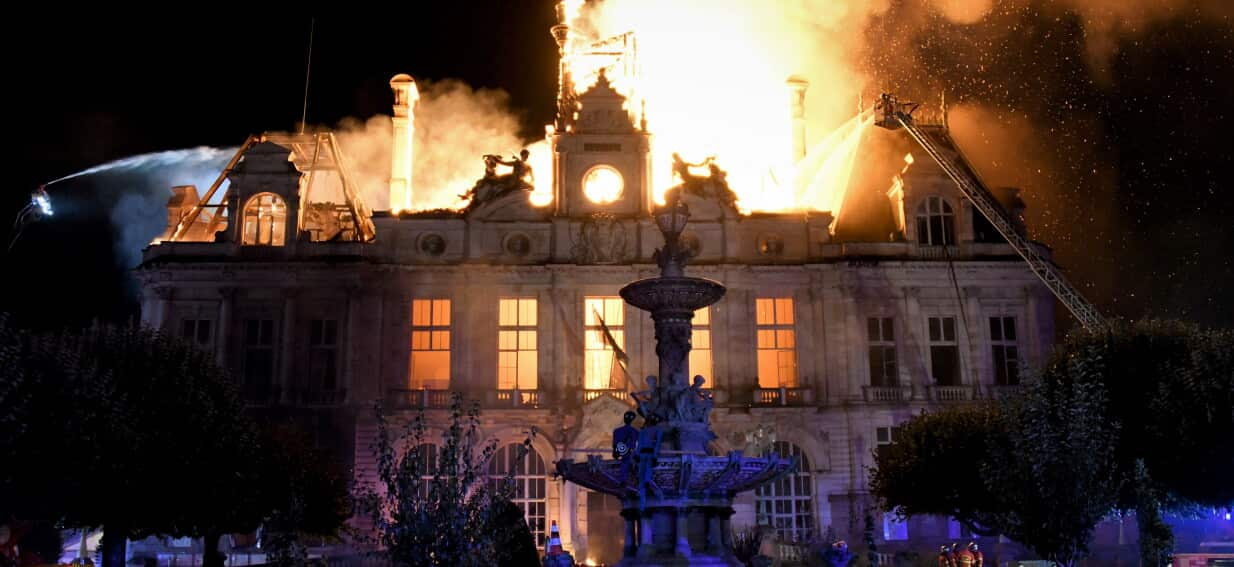
What began as an isolated protest over a police shooting in a Paris-area suburb has rapidly ignited into a nationwide inferno, exposing deep-seated frustrations and prompting France's most widespread and damaging unrest in years.
From the cobblestone streets of Marseille to the bustling boulevards of Lyon, a wave of anger has swept across the nation, leaving a trail of torched vehicles, damaged public buildings, and shattered peace.
Spark Ignites a Powder Keg
The immediate catalyst for the widespread unrest was the fatal shooting of a 17-year-old French-Algerian, identified only as Nahel M., by police during a traffic stop in Nanterre, a western suburb of Paris. The incident, captured on video, quickly went viral, prompting outrage and accusations of excessive force.
However, as SBS News Top Stories reported, this single tragedy served less as an isolated event and more as a spark igniting a powder keg of simmering discontent. The immediate reaction in Nanterre, driven by grief and fury, quickly resonated with communities across France, particularly in working-class suburbs and areas with significant immigrant populations, where feelings of discrimination and marginalisation have long festered.
Echoes of Past Unrest
This is not the first time France has grappled with such widespread civil unrest. Memories of the 2005 riots, sparked by the deaths of two teenagers fleeing police, are still potent. Those events, too, saw a surge in violence, targeting public property and symbols of the state, before eventually subsiding.
Experts suggest that while the current protests share superficial similarities, the underlying factors are arguably more complex and pervasive. A cocktail of social and economic grievances, coupled with perceptions of systemic injustice, appears to have fuelled the current wave. Unemployment, limited opportunities, and a sense of disenfranchisement within certain communities are frequently cited as contributing factors, exacerbated by recent cost-of-living pressures that have hit lower-income households particularly hard.
Government's Stance and Public Safety Concerns
In response to the escalating violence, the French government has mobilised thousands of police and gendarmerie officers, deploying armoured vehicles and implementing curfews in some municipalities. President Emmanuel Macron has condemned the violence, calling for calm and promising a swift investigation into Nahel M.'s death, while also vowing to restore order.
However, the deployment of security forces, while necessary to quell the immediate unrest, also risks further inflaming tensions in communities that already feel over-policed. Public safety has become a paramount concern, with businesses shuttering early and public transport networks curtailing services, leading to significant economic disruption.
A Nation Divided, A Future Uncertain
The protests have laid bare a deep schism within French society. While a significant portion of the population expresses solidarity with the anger over Nahel M.'s death and the broader issues of systemic discrimination, many others are appalled by the destruction and disruption. Calls for stronger government action and a return to law and order are also growing louder.
The challenge for the French government now extends beyond simply restoring order. It faces the daunting task of addressing the underlying societal fractures that have been so dramatically exposed. Whether through sustained dialogue, policy reforms, or a renewed focus on social inclusion, the path forward for a nation grappling with such profound anger remains deeply uncertain.


