
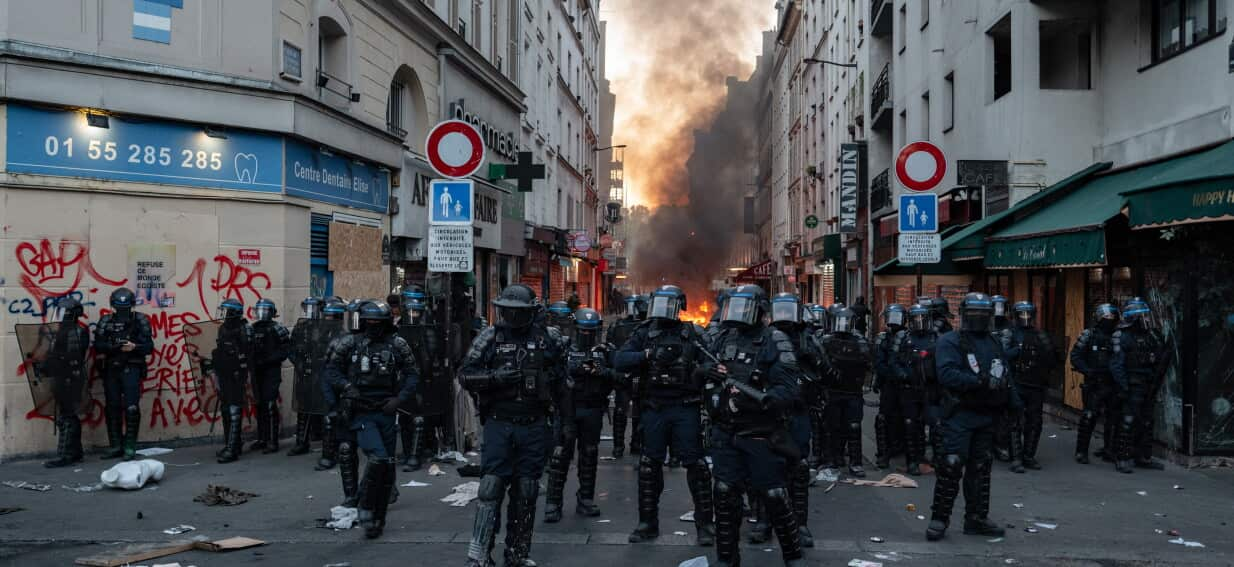
French authorities have intensified regional curfews and ramped up nationwide security operations in an urgent bid to quell widespread civil unrest, leaving the nation bracing for an uncertain political aftermath.
The expanding restrictions mark a severe escalation in official efforts to stem consecutive nights of violent confrontations, widespread property destruction, and clashes between demonstrators and riot squads. SBS News Top Stories reported that as curfews expand across France, questions are growing over what measures authorities must adopt next to ensure lasting stability.
Night-time exclusions spread across municipalities
Local authorities in multiple suburban belts, as well as several regional cities, have invoked emergency measures to bar unaccompanied minors from urban centres after dusk and shut down public transit ahead of nightfall. Tram and bus networks across major metropolitan hubs have been halted hours before their regular termination times, a direct response to coordinated arson attacks against civic infrastructure.
The financial toll of the destruction is already projected to exceed tens of millions of euros—amounting to hundreds of millions of Australian dollars (AUD)—as public transport depots, civic buildings, and retail precincts assess severe damage. With dozens of towns now subject to varying forms of nocturnal containment, community advocates warn that blanket movement restrictions risk alienating innocent residents who already feel marginalised from mainstream French society.
Heavy policing meets deep-rooted urban grievances
Tens of thousands of police officers, supported by elite tactical response teams, have been mobilised across the republic to enforce order. While the French government maintains that restoring public safety remains its paramount duty, civil rights organisations argue that relying solely on forceful deterrence fails to resolve systemic disadvantages in working-class banlieues.
The unrest has reignited fierce national debate regarding institutional discrimination, high youth unemployment, and historically fraught relationships between local communities and law enforcement. Analysts observe that while night-time curfews may temporarily suppress open defiance on main thoroughfares, deep-seated socio-economic grievances remain fundamentally unaddressed.
International unease and pressure on the Élysée
The deepening crisis represents an acute domestic trial for President Emmanuel Macron, whose administration has confronted repeated waves of civil friction in recent years, ranging from cost-of-living disputes to controversial pension reforms. The rapid deterioration of urban order has forced the postponement of high-profile official events and raised concerns across European capitals about cross-border political volatility.
Foreign ministries, including Australia’s Department of Foreign Affairs and Trade, have advised travellers to exercise high vigilance, monitor local media, and avoid all areas subject to curfews or active public demonstrations. As authorities tally ongoing arrests and property destruction, the French state faces an increasingly fraught challenge: enforcing the rule of law without entrenching the social fracture that sparked the crisis.


