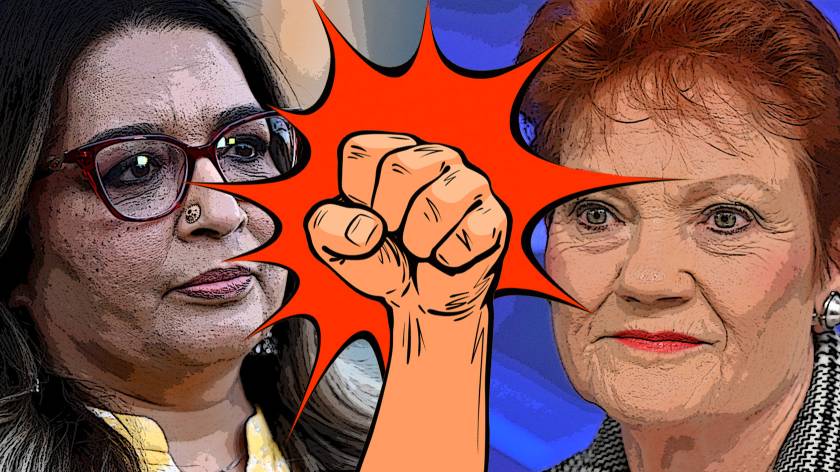
A contentious legal decision compelling One Nation leader Pauline Hanson to remove a tweet described by many as 'abhorrent' has sparked a robust discussion across Australia, raising significant questions about the boundaries of free speech in the digital age.
The ruling has drawn criticism from various quarters, with some legal commentators arguing that while Hanson's remarks may have been distasteful, the state compelling the deletion of political expression, however unsavoury, sets a dangerous precedent for democratic discourse.
The Crikey Commentary
Independent news outlet Crikey was quick to weigh in, asserting that despite the potentially objectionable nature of Senator Hanson's tweet, its forced removal ventures into precarious territory. The publication highlighted the inherent tension between protecting individuals from hate speech and upholding the fundamental right to freedom of expression, a cornerstone of Australian democracy.
Crikey reported that while words can undoubtedly transgress legal boundaries, the act of an authority ordering the deletion of a politician's statement, irrespective of its perceived racism, treads an entirely different and concerning path. This perspective underscores the broadsheet's commitment to robust public debate, even when confronted with challenging or unpopular viewpoints.
Navigating the Legal Labyrinth
The legal landscape surrounding online speech in Australia is complex and constantly evolving. While there are provisions in place to address defamation, incitement to violence, and certain forms of hate speech, the precise definition of 'abhorrent' political expression and the appropriate judicial response remains a contentious area. Critics of the ruling fear that allowing courts to mandate the removal of such content could be interpreted as a form of censorship, potentially stifling legitimate, albeit divisive, political debate.
Legal scholars are now scrutinising the implications of this decision. Some argue that it could empower future attempts to silence dissenting voices or unpopular opinions, creating a chilling effect on public discourse. Others maintain that it's a necessary step to protect vulnerable communities from the pernicious spread of online hate and discrimination. The cost of legal challenges in such cases can also be substantial, running into many thousands of Australian dollars, prompting concerns about access to justice and the disproportionate impact on smaller political entities or individuals.
The Free Speech Conundrum
At the heart of this controversy lies the perennial dilemma of how to balance the right to free speech with the need to safeguard societal harmony and prevent the propagation of hate. In a multicultural nation like Australia, this balance is particularly delicate. Proponents of unrestricted speech often argue that the best way to combat hateful ideas is through open debate and counter-speech, rather than suppression. They contend that censorship, even of reprehensible content, merely drives it underground and can inadvertently confer a false sense of victimhood upon those whose speech is curtailed.
Conversely, advocates for stricter controls on hate speech emphasise the real-world harm it can inflict, leading to discrimination, harassment, and even violence against targeted groups. They argue that freedom of speech does not equate to freedom from consequences, and that certain forms of expression, particularly those that incite hatred or prejudice, fall outside the bounds of protected speech. The ongoing debate highlights the lack of a universal consensus on where this critical line should be drawn, leaving the Australian public and legal system grappling with these fundamental ethical and judicial questions.