
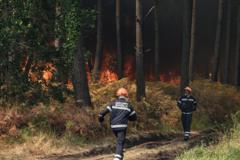
A catastrophic inferno continues to rage across France's famed Gironde wine region, forcing emergency services into a desperate battle against relentless flare-ups and a brutal 40-degree Celsius heatwave. As of Wednesday, hundreds of firefighters were on the front line, struggling to contain conflagrations that have already charred vast swathes of pine forest and agricultural land.
Adding to the perilous situation, authorities face resistance from some determined locals who have refused to heed evacuation orders, instead choosing to remain and defend their properties. This defiance complicates efforts to ensure public safety and allocate resources effectively, as fire crews are diverted to manage potential risks in occupied areas.
Unprecedented Conditions Fuel Fires
The current wildfires, which reignited after a brief period of containment, have been exacerbated by a combination of extreme drought and an unprecedented heat dome settled over Western Europe. This prolonged heatwave has not only dried out vegetation to tinderbox levels but has also created challenging working conditions for the emergency personnel involved. Firefighters, many from local volunteer brigades and some reinforced by national deployments, are seen toiling under a relentless sun, battling exhaustion as they work in thick smoke and searing temperatures. The sheer scale of the blazes requires continuous aerial support, with water-bombing aircraft making repeated sorties to douse hotspots and create firebreaks, sometimes struggling against gusting winds that fan the flames and spread embers over long distances.
Local Defiance and Evacuation Challenges
While official evacuation orders have been issued for several vulnerable communities within the Gironde, BBC World reported instances of residents choosing to stay behind. These individuals, often long-time inhabitants with deep ties to the land, are reportedly attempting to protect their homes and livelihoods with private hoses, buckets, and even farm machinery. This civilian presence near active fire zones presents significant risks, not only to themselves but also to firefighters who may be required to divert from primary containment efforts to ensure their safety. Authorities have reiterated the critical importance of heeding official advice, stressing that professional firefighters are best equipped to handle the volatile and rapidly changing nature of these blazes.
Regional Impact and Broader European Context
The environmental and economic toll on the Gironde region is already significant, with thousands of hectares of valuable pine forests and agricultural land—including vineyards crucial to the local economy—reduced to ash. The long-term impact on biodiversity, air quality, and the region's agricultural output is expected to be substantial. This French crisis is not isolated; it forms part of a broader pattern of extreme weather events sweeping across Southern Europe, with other nations like Spain and Portugal also battling their own devastating wildfires. Climatologists point to climate change as a key driver behind the increased frequency and intensity of such heatwaves and droughts, signalling a potentially grim future for fire seasons across the continent. French President Emmanuel Macron’s office has indicated that both national and European resources are being marshalled to assist the beleaguered region, with further aid potentially including specialist equipment and personnel from neighbouring countries as the battle for containment continues.