
As Disney's highly anticipated live-action remake of Moana prepares to grace Australian cinemas next week, starring Hollywood behemoth Dwayne 'The Rock' Johnson, it's a pertinent moment to reflect on a cinematic predecessor largely lost to the annals of history. This forthcoming blockbuster, building on the phenomenal success of its 2016 animated forebear, owes an unexpected debt to a pioneering silent film from 1926 – an original 'Moana' that captured Polynesian life almost a century ago.
A Silent Glimpse into Paradise
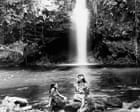
Forgotten by many, the 1926 film – also titled Moana – was a groundbreaking documentary by American filmmaker Robert J. Flaherty. Shot on location in Safune, Samoa, it aimed to authentically portray the daily lives and cultural rituals of the Samoan people, long before technicolour or sound became standard in cinema. This cinematic endeavour wasn't merely a quaint historical artefact; it was a significant cultural document, pioneering a new form of ethnographic filmmaking that sought to immerse audiences in distant lands.
Guardian Australia Culture reported that film historian Bruce Posner contends, "Someone at Disney picked the bones of the 1926 Moana to make their movie." This suggests a more direct lineage than mere coincidence, implying that the creative wellspring for the 21st-century animated hit might contain elements consciously or unconsciously drawn from its distant, silent ancestor.
The Birth of a Genre
Flaherty, renowned for his equally impactful Nanook of the North (1922), further cemented his reputation as a master of 'docu-drama' with Moana. He coined the term 'documentary' himself, and his approach involved living among the communities he filmed, observing their customs, and then recreating scenarios for the camera that he believed accurately reflected their daily existence. This innovative methodology established a new genre, paving the way for countless ethnographical films and documentaries that followed. For audiences of the 1920s, largely unfamiliar with the South Pacific, Moana offered an unprecedented window into a world far removed from their own.
The film focused on a young Samoan man named Moana, depicting his coming-of-age rituals, including the traditional tatau (tattooing process), fishing, hunting, and community life. While elements were staged for dramatic effect, Flaherty's commitment to capturing cultural authenticity set a high bar for future filmmakers exploring similar themes. The film's enduring legacy lies not just in its historical significance, but in its nascent attempt to respectfully portray non-Western cultures on screen.
From Black and White to Box Office Gold
Today's Disney juggernaut, with its vibrant animation and catchy musical numbers, presents a stark contrast to Flaherty's sepia-toned, silent offering. Yet, the thematic resonance is undeniable. Both iterations of Moana centre on a young protagonist navigating their identity within a rich Polynesian cultural landscape. While Disney's version weaves a fantastical narrative of deities and demigods, the underlying celebration of island heritage and connection to the ocean echoes the spirit of anthropological curiosity that drove the 1926 film.
It is fascinating to ponder how much of Flaherty's original vision, perhaps subtly, found its way into the creative consciousness of Disney's storytellers. Was it a conscious homage, a serendipitous alignment of themes, or merely the power of a compelling cultural narrative that transcends time and medium? Whatever the connection, the enduring appeal of 'Moana' – whether in silent black and white or a multi-million dollar animated spectacle – speaks volumes about the universal draw of Polynesian culture and its rich tapestry of stories.
A Century's Journey
As Australian audiences prepare to embark on another cinematic voyage with the live-action Moana, it serves as a worthy moment to acknowledge the unsung pioneer that first introduced ‘Moana’ to the world almost a century ago. The original Moana, a forgotten jewel of early cinema, perhaps deserves a renewed scholarly interest, not merely as a historical footnote, but as a foundational text that subtly influenced a global phenomenon. For those keen to delve deeper, restored versions of Flaherty's Moana occasionally surface, offering a unique opportunity to witness its quiet power and influence firsthand. It's a journey worth taking, bridging a century of cinematic storytelling from Samoa to the silver screens of Sydney, all for a few dollars.