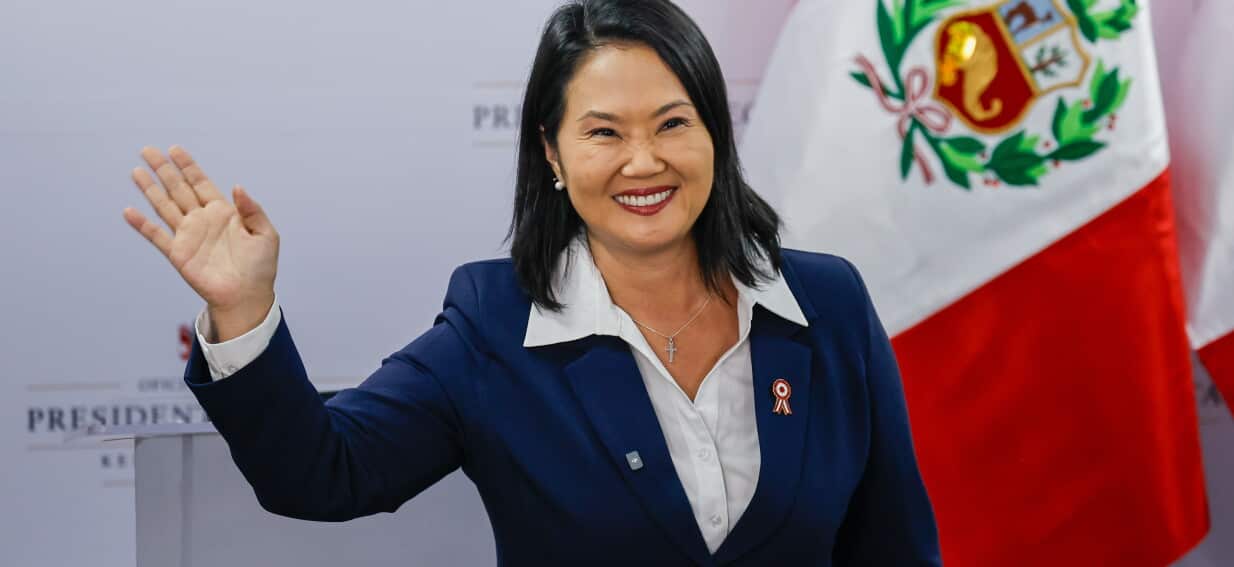
Keiko Fujimori, daughter of controversial former president Alberto Fujimori, has emerged victorious in Peru's highly contested presidential race, a result that reverberates far beyond Lima's bustling streets. Her win, confirmed by SBS News Top Stories, is being widely interpreted as another definitive sign of Latin America's increasing shift towards conservative governance, even as her defeated leftist opponent vows to reject the legitimacy of her administration.
The election, which saw Fujimori, leader of the Popular Force party, pitted against the socialist Free Peru party's Roberto Sanchez, was a tight contest marked by deep ideological divides and lingering shadows of Peru's tumultuous political past. For many observers, Fujimori's triumph represents a return to a more traditional, market-friendly political direction for the Andean nation.
A Dynastic Return to Power
Keiko Fujimori's ascent to the presidency marks a profound chapter in her family's enduring influence on Peruvian politics. Her father, Alberto Fujimori, governed Peru with an iron fist from 1990 to 2000, a period remembered for both aggressive economic reforms that tamed hyperinflation and a crackdown on the Shining Path insurgency, alongside allegations of human rights abuses and corruption that ultimately led to his ousting and imprisonment. His legacy remains deeply polarising, yet his daughter has managed to harness a considerable portion of his supporters, who credit him with bringing stability to a chaotic nation.
Her campaign hinged on promises of tackling crime, boosting economic growth, and maintaining a strong stance against socialistic policies. This platform resonated with a significant segment of the Peruvian electorate, particularly those weary of political instability and attracted to a perceived strong hand at the helm.
Sanchez Rejects Results as Tensions Mount
The declaration of Fujimori's victory has not been met with universal acceptance. Roberto Sanchez, representing the left-wing Free Peru party, wasted no time in denouncing the outcome. According to SBS News Top Stories, Sanchez has publicly stated that he will not recognise Fujimori's government, alleging irregularities in the electoral process. While specific details of these alleged irregularities have not been widely disseminated, his refusal to concede immediately signals a potentially fractious start to Fujimori's presidency, with implications for national unity and political stability.
The prospect of a government facing immediate delegitimisation from its primary opposition poses a significant challenge for Peru, a country that has seen several presidents fall amid corruption scandals and political infighting in recent years. Analysts suggest that such a deep political cleavage could hinder governance and economic progress if not addressed swiftly through dialogue or legal processes.
Latin America's Rightward Tilt Continues
Fujimori's victory in Peru contributes to a discernible pattern observed across Latin America in recent years. From Jair Bolsonaro's election in Brazil to the conservative shifts seen in countries like Colombia and Chile, there appears to be a prevailing sentiment among voters favouring more centre-right or right-wing leadership. This trend is often attributed to a combination of factors, including public disillusionment with traditional leftist parties, concerns over economic performance, and a desire for stronger law and order.
For Australian businesses and investors with interests in Latin America, this broader regional shift could signal a period of increased stability and potentially more favourable conditions for market-oriented policies. However, the internal political turmoil threatened by Sanchez’s non-recognition in Peru introduces an element of uncertainty that will be closely watched. The coming weeks will be crucial in determining whether Peru can navigate this immediate post-election friction and embark on a path of stable governance under its new conservative leader.