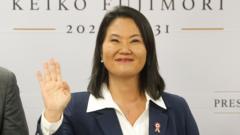
Lima, Peru — After weeks of nail-biting suspense and allegations of electoral irregularities, Keiko Fujimori, scion of Peru's most polarising political dynasty, has been officially confirmed as the nation's new president. The announcement, made almost a month after the June 2 balloting, draws a tentative close to a fiercely contested election that has underscored the deep schisms within Peruvian society.
Ms. Fujimori, a former legislator and three-time presidential candidate, secured victory with a fraction of a percentage point lead over her challenger,Pedro Castillo, a leftist union leader. The National Elections Jury (JNE) confirmed her win after meticulously reviewing thousands of contested ballots, a process that saw both candidates claim victory and allege fraud. Her success marks a remarkable political comeback for the Fujimori family, whose patriarch, Alberto Fujimori, remains a controversial figure in Peruvian history, currently imprisoned for human rights abuses and corruption. BBC World reported on the initial declaration of her win, noting the extraordinary delay in the final count.
A Nation on Edge: The Protracted Count
The presidential race began with a surprisingly strong showing from Mr. Castillo in the first round, forcing a run-off against Ms. Fujimori. The subsequent second round quickly devolved into a protracted legal battle, with both camps lodging numerous challenges. Ms. Fujimori's Fuerza Popular party initially claimed widespread fraud, echoing similar sentiments from her father's political playbook in previous elections. Conversely, Mr. Castillo's supporters also raised concerns about the transparency of the vote count in some regions, leading to a period of intense uncertainty and political gridlock.
The JNE's painstaking review involved poring over individual ballots and electoral reports, a process that saw daily shifts in the provisional vote count and kept the nation on tenterhooks. International observers largely affirmed the integrity of the electoral process, despite the numerous challenges mounted by both campaigns. The delay, however, exacerbated existing social and political tensions, with street protests breaking out in Lima and other major cities as supporters of both candidates demanded transparency and a swift resolution.
The Lingering Shadow of 'El Chino'
Keiko Fujimori's political career has been inextricably linked to her father, Alberto "El Chino" Fujimori, who governed Peru with an iron fist from 1990 to 2000. While revered by some for crushing the Shining Path guerrilla movement and stabilising the economy, he is reviled by others for authoritarian tactics, corruption, and gross human rights violations. His conviction and imprisonment have left a bitter legacy that continues to divide the nation.
Ms. Fujimori has sought to distance herself from her father's more controversial actions while simultaneously appealing to his loyal base. Her campaign slogan, often invoking a sense of order and national pride, resonated with a segment of the electorate yearning for stability amidst ongoing economic challenges and the devastating impact of the COVID-19 pandemic. Her victory, therefore, represents not just a personal triumph but also a potent symbol of the enduring power of the Fujimori name in Peruvian politics, despite the controversies it carries.
An Uphill Battle for Stability
President-elect Fujimori now faces the arduous task of uniting a deeply fractured nation and addressing pressing issues, including a struggling economy, lingering health crises, and widespread social inequality. Her slender mandate means she will likely face significant opposition in Congress, where her Fuerza Popular party does not hold an outright majority. Building consensus and forging cross-party alliances will be crucial for her administration to implement its agenda.
The global economic slowdown and the specific challenges wrought by the pandemic have hit Peru particularly hard, with unemployment rising and poverty rates increasing. Ms. Fujimori's administration will be under immediate pressure to deliver tangible improvements to the lives of ordinary Peruvians. With the ghost of her father's presidency still looming large, her tenure will be scrutinised both domestically and internationally, as Peruvians hope for a period of stability and progress after a tumultuous election season.