
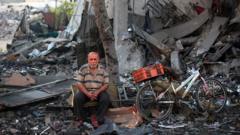
A potential roadmap for the disarmament of Hamas, despite being riddled with colossal political and logistical hurdles, is being cautiously welcomed as a sliver of hope for the ravaged Gaza Strip. While the blueprint offers a tantalising prospect for de-escalation, the grim realities of entrenched conflict, profound mutual suspicion, and the humanitarian catastrophe unfolding daily threaten to derail any progress.
BBC World reported that the proposition faces significant obstacles, acknowledging that the intricate web of political maneuvering, the devastation wrought by war, a near-total absence of trust between warring factions, and the tragic loss of thousands of lives will render any agreement exceptionally difficult to achieve. Australian foreign policy experts echoed these sentiments, highlighting the monumental challenge of implementing such a plan in one of the world's most volatile regions.
Deep-Seated Distrust and Political Quagmires
The fundamental barrier to any disarmament agreement lies in the profound distrust permeating all parties involved. Decades of conflict, punctuated by numerous failed peace attempts, have forged an environment where suspicion trumps cooperation. For Hamas, surrendering its weapons would be seen by many within its ranks as a betrayal of its ideological struggle and a capitulation to adversaries. Conversely, Israel views Hamas’s disarmament as a non-negotiable prerequisite for long-term security, a stance bolstered by repeated rocket attacks and border infiltrations.
Political complexities extend beyond the immediate belligerents. Regional powers, each with their own geopolitical agendas and allegiances, exert considerable influence, further complicating negotiations. Any disarmament deal would necessitate delicate diplomatic ballet, ensuring that the security concerns and political aspirations of various stakeholders are, at least partially, addressed. Without a comprehensive security framework acceptable to all, the prospect of Hamas relinquishing its arsenal remains remote.
The Devastating Human Toll and Reconstruction
The human cost of the conflict in Gaza is staggering. Tens of thousands have been killed, countless more injured, and critical infrastructure has been decimated. The widespread destruction of homes, hospitals, and schools presents an urgent humanitarian crisis, demanding immediate and sustained international intervention. Any disarmament plan would need to be inextricably linked to a robust and generously funded reconstruction effort.
However, the question of who funds and oversees such reconstruction is a contentious one. International donors, including Australia, would likely be hesitant to commit substantial financial aid without credible assurances that resources would not be diverted or exploited by militant groups. The economic revitalisation of Gaza, creating sustainable employment opportunities and rebuilding essential services, is paramount to fostering an environment conducive to lasting peace and reducing the appeal of extremist ideologies.
The Path Forward: A Fragile Hope
Despite the formidable challenges, the very existence of a disarmament proposal, however embryonic, offers a flicker of hope. It suggests that, beneath the layers of hostility and despair, there remains a recognition that the current cycle of violence is unsustainable. For such a plan to succeed, it would require unprecedented levels of international cooperation, sustained diplomatic pressure, and a willingness from all sides to make painful concessions.
Analysts suggest that any successful disarmament would likely need to be phased, perhaps commencing with a verified cessation of hostilities and a gradual reduction of certain weapon categories, monitored by an independent international body. The establishment of secure humanitarian corridors and a commitment to protecting civilian lives would be non-negotiable. While the odds are stacked against it, the potential for a future Gaza free from the immediate threat of armed conflict, however distant, makes this proposal one worth pursuing, albeit with cautious optimism.