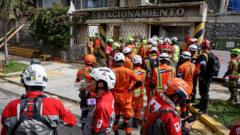
A thousand days since the bloody October 7 attacks ignited the current conflict, the Gaza Strip has been reduced to a scene of unprecedented devastation, with an estimated 90 per cent of its buildings and infrastructure destroyed and 80 per cent of its territory now reportedly under Israeli control, according to an analysis by Al Jazeera.
The grim milestone, reached this week, paints a stark picture of a humanitarian catastrophe unfolding in real-time, far from the daily headlines that once dominated Australian news cycles. The protracted conflict has not only reshaped the physical landscape of the besieged enclave but has also seen a critical peace initiative falter, leaving millions displaced and without hope.
Unprecedented Destruction
Satellite imagery, ground reports, and expert analysis compiled by Al Jazeera reveal a scale of destruction rarely witnessed in modern warfare. Residential areas, hospitals, schools, and essential civilian infrastructure have been systematically targeted or caught in the crossfire, leaving an estimated 2.3 million people displaced, many multiple times over. The United Nations has repeatedly warned of an impending famine, with aid agencies struggling to deliver vital supplies amidst the relentless bombardment and blockade conditions.
The economic impact is similarly catastrophic. Before October 7, Gaza's economy was already fragile, propped up by international aid and limited commerce. Now, what little industry existed has been annihilated. Rebuilding efforts, if they ever begin, would require an astronomical sum and decades of sustained international commitment – figures that currently seem unattainable given the ongoing hostilities. Some analysts estimate the cost of reconstruction in the hundreds of billions of Australian dollars, a figure that dwarfs Gaza's pre-war economic output many times over.
Expanding Israeli Control
Beyond the physical destruction, Al Jazeera’s investigation highlights a significant expansion of Israeli control over the Gaza Strip, with roughly 80 per cent of the territory now directly or indirectly under Israeli military occupation. This expansion includes the establishment of buffer zones along the border, control over key access points, and the sustained presence of Israeli forces deep within the enclave. This increased footprint effectively shrinks the already tiny territory available to the Palestinian population, raising serious questions about the future viability of any self-governance in Gaza.
The implications of this territorial shift are profound. It curtails Palestinian movement, further isolates communities, and complicates any future peace settlements that would envision a sovereign Palestinian entity. Human rights organisations have voiced concerns that this de facto annexation of territory could be a precursor to long-term demographic and political changes within the Strip.
Board of Peace Falters
The conflict's persistence has also profoundly impacted international efforts towards a durable peace. The so-called 'Board of Peace' – a multinational diplomatic initiative aimed at de-escalating tensions and fostering dialogue – has largely faltered, unable to bridge the chasm between warring parties. Repeated ceasefire efforts have collapsed, and international resolutions have gone unheeded, leaving the region in a state of perpetual instability.
Australian Foreign Minister Penny Wong has previously called for an immediate humanitarian ceasefire and a two-state solution, echoing widespread international sentiment. However, the current trajectory of the conflict, as evidenced by the 1,000-day milestone, suggests that peace remains a distant prospect, with diplomatic avenues seemingly exhausted and the humanitarian crisis deepening with each passing day. The international community, including Australia, faces renewed calls to leverage its influence to push for a sustainable resolution to a conflict that has now endured for an agonising thousand days.