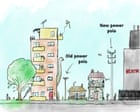
Plans to expand Australia’s largest data centre operator in Melbourne’s west have stalled following fierce community backlash over towering concrete power poles required to feed artificial intelligence infrastructure.
NextDC’s ambition to double the capacity of its flagship M3 facility in West Footscray has run into formidable local resistance, after electricity distributor Jemena proposed replacing traditional timber utility poles with imposing concrete stanchions capable of carrying high-voltage transmission lines.
Monoliths overshadow suburban streets
As reported by The Guardian Australia, the stark visual contrast between the existing timber poles and the proposed industrial-grade concrete masts has galvanised suburban residents. While standard residential electricity poles typically rise around 10 to 12 metres, the concrete replacements needed to carry high-capacity 66-kilovolt lines can tower between 20 and 30 metres above streetscapes, completely overshadowing single- and double-storey family homes.
Residents across Melbourne’s inner west have voiced alarm at the rapid industrialisation of their neighbourhood streets, warning that the colossal structures would fundamentally alter the character of residential avenues, destroy established tree canopies, and potentially dent property values.
Soaring power demands of artificial intelligence
The dispute underscores the immense, resource-intensive reality underpinning the modern digital economy. While technology conglomerates promote cloud storage and generative artificial intelligence as weightless, virtual commodities, their physical operations require vast amounts of real estate, cooling water, and baseload electricity.
NextDC’s M3 site is designed to support high-density computing loads, catering to hyperscale cloud providers and multinational technology firms racing to implement automated AI systems. Doubling the site’s processing capacity necessitates an unprecedented surge in power supply, forcing network distributors like Jemena to upgrade local distribution infrastructure to feed the energy-hungry server halls.
Pressure builds to mandate underground cables
Community advocates and local council representatives have demanded that the heavy transmission lines be buried underground rather than strung overhead on industrial masts. Although undergrounding transmission infrastructure eliminates visual blight and significantly reduces vulnerability to extreme weather events, network distributors frequently push back due to the dramatic cost differential.
Laying high-voltage lines subterraneanly can cost up to ten times more than erecting overhead poles, a commercial expense that distribution companies and datacentre operators are often reluctant to bear unless legally mandated or heavily subsidised by planning authorities.
Tech expansion collides with urban planning
The West Footscray impasse reflects a broader, emergent challenge facing Australian urban planning as data centre developments proliferate across major capital cities. With billions of dollars in commercial investment pouring into digital infrastructure nationwide, planning frameworks are struggling to balance tech-driven economic growth with established liveability standards.
Unless state regulators and commercial operators reconcile the physical demands of high-voltage computing with the expectations of suburban communities, similar planning battles are inevitable along the nation’s electricity corridors.