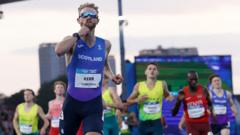
Glasgow has erupted in a wave of jubilation after local athletics sensation Josh Kerr claimed a stunning victory in a fiercely contested mile race, a triumph that BBC Sport declared was precisely the emotional catalyst the city’s 2026 Commonwealth Games aspirations desperately needed.
In an era often dominated by technologically assisted record attempts, Kerr’s performance was a throwback to a grittier, more visceral form of competition. There were no flashing wave lights guiding his pace, no designated pacemakers to dictate the tempo; just raw, unadulterated racing. It was, as one commentator aptly put it, a “Saturday night scrap,” played out under “Glasgow rules,” and Kerr, a proud Scot, was unequivocally not going to be outfought on his home turf.
A City’s Champion Rises
The atmosphere in Glasgow was reportedly electric, a palpable anticipation building as Kerr, an Olympic medallist and world champion, prepared to toe the line. His local connection undoubtedly amplified the stakes, transforming a high-calibre athletic event into a deeply personal quest for many in attendance. This wasn't merely another race; it was an affirmation of local pride and a powerful demonstration of the spirit Glasgow hopes to infuse into the 2026 Commonwealth Games, should its bid be successful.
BBC Sport’s coverage highlighted the emotional resonance of Kerr’s win, noting how such moments of unbridled sporting glory are essential in galvanising public support and international attention for major sporting bids. For a city vying to host a global spectacle, having a local hero deliver a performance of such magnitude on home soil is, in marketing terms, priceless. It provides a compelling narrative, a tangible example of the passion and athletic prowess that could define a future Games.
Gritty Victory, Global Impact
The absence of pacemakers meant the race unfolded with an unpredictable ebb and flow, relying purely on the strategic acumen and sheer endurance of the athletes. This unvarnished approach to racing often yields the most dramatic finishes, and Kerr delivered precisely that. His ability to navigate the tactical challenges and then unleash a devastating kick in the final stages showcased not just his physical conditioning but also his formidable mental strength.
Such a victory, achieved through grit and determination rather than pre-planned pacing strategies, resonates deeply with an Australian audience familiar with the hard-fought battles on our own sporting fields. It speaks to a universal appreciation for genuine competition and an athlete's unyielding will to win. The financial implications for Glasgow's bid are also significant; positive global exposure from such events can sway influential decision-makers and attract crucial investment, potentially worth hundreds of millions of Australian dollars, into the city’s infrastructure and sporting facilities.
The Road to 2026
Kerr’s inspiring performance undoubtedly injects considerable momentum into Glasgow’s campaign for the 2026 Commonwealth Games. The emotional high generated by his win provides a powerful foundation upon which the bid committee can build. It offers a compelling vision of what the Games could represent for the city: a platform for local heroes to shine, a celebration of sporting excellence, and a testament to Glasgow's enduring passion for athletics.
While the decision on the 2026 host city is still some time away, moments like these are invaluable. They transcend mere sporting results, becoming symbols of aspiration and community spirit. For Glasgow, and indeed for the broader Commonwealth Games movement, Josh Kerr’s golden mile was far more than just a race; it was a powerful statement of intent.